Geography Gamification Trends Worth Playing
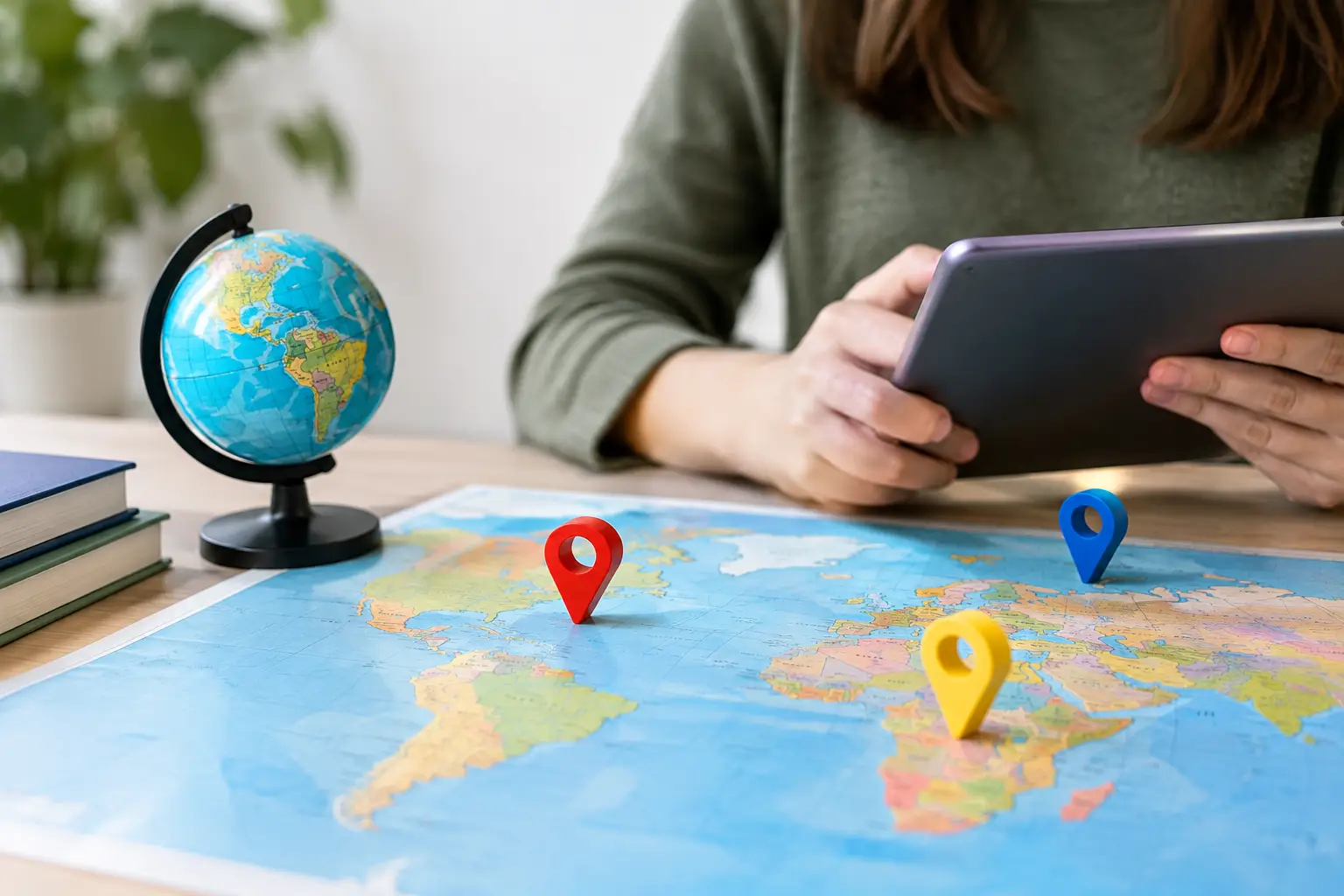
A partially covered flag, a capital city clue, or a dot on a map can turn a spare two minutes into a real learning moment. That is why geography gamification trends are gaining momentum: they make world knowledge feel less like homework and more like a challenge you want to beat tomorrow.
The strongest geography games are not trying to cram every country fact into one session. They give players one clear task, fast feedback, and a reason to come back. For students, travelers, trivia fans, and daily puzzle players, that formula makes a big difference.
Geography Gamification Trends Are Getting Smaller
For years, educational games often tried to do everything at once. Long lessons, dense maps, multiple-choice quizzes, badges, timers, and explanations all competed for attention. The newer trend is more focused: one quick challenge with a simple rule.
Guess the country from its outline. Name a capital. Identify a flag with part of the design hidden. Estimate which country lies north or farther away. Each format asks for a decision, not a study session.
That smaller scope is not a limitation. It is the point. A short game lowers the barrier to starting, while repetition builds recognition over time. Players may not remember every fact after one round, but a country seen across several game modes becomes much easier to recall.
This also fits the way people actually use casual games. They play while waiting for coffee, between classes, on a break, or before bed. Geography has an advantage here because every round can reveal something concrete about the world without demanding a major time commitment.
Daily Puzzles Turn Knowledge Into a Habit
The daily challenge format is one of the clearest shifts in geography play. Instead of an endless feed of random questions, everyone gets the same puzzle on the same day. That shared setup adds a little anticipation and a lot of conversation.
A daily puzzle works because it gives players a natural stopping point. There is no pressure to keep playing for an hour. You solve it, compare your result, and return when there is a new challenge. The game becomes part of a routine without taking over the day.
For learning, the cadence matters. Seeing one new flag each day is manageable. So is meeting a new capital or working through a few carefully chosen clues about a mystery country. The pace leaves room for memory to form, especially when familiar places return later in a different context.
The trade-off is variety. A single daily puzzle can feel too limited if it is the only mode available. The best platforms balance a shared daily moment with optional games, quizzes, or streak-friendly challenges for players who want another round.
Better Feedback, Not More Pressure
Good geography gamification does more than say right or wrong. It shows players how close they were and gives the miss some meaning. Distance, direction, neighboring regions, color patterns, language hints, and continent clues can turn an incorrect guess into useful information.
This is where map-based feedback is especially effective. If a player guesses Brazil when the answer is Angola, seeing that the target is east and across the Atlantic creates a geographic relationship. It is more memorable than simply reading the answer.
Still, feedback has to stay readable. Too many arrows, data points, and labels can make a lightweight puzzle feel like a dashboard. The goal is a quick "aha" moment: close, but north; right continent, wrong coast; recognizable colors, different symbol.
A fair game also avoids making people feel punished for not already knowing the answer. Geography knowledge is uneven. Someone may recognize European flags instantly but struggle with island nations, while another player has the opposite strengths. Helpful clues let more people stay in the game long enough to improve.
Friendly Competition Is Replacing High-Stakes Rankings
Leaderboards are not going away, but geography games are moving toward softer forms of competition. A score grid, a streak, a personal best, or a result shared with friends can be more motivating than a giant global ranking.
That is especially true for educational play. Players want proof that they are improving, but they do not always want to be measured against experts who can name every national flag from memory. Personal progress keeps the focus on learning. Shared daily results add the social spark.
A simple three-try flag challenge illustrates the appeal. The rules are easy to explain, every player faces the same country, and a strong result is easy to share. There is enough pressure to make the answer satisfying, but not so much that a mistake ruins the experience.
For classrooms and families, this approach works well because it creates a conversation rather than a test. One person knows the flag colors. Another remembers the capital. Someone else recognizes the country’s shape on a map. Knowledge becomes collaborative.
Geography Games Are Expanding Beyond Flags
Flags remain a natural starting point because they are visual, compact, and surprisingly tricky. But one of the most useful geography gamification trends is the move toward connected game modes. A player who learns a flag can later meet the same country through its capital, location, border, language, or distance from another place.
This matters because recognition is only the first step. Knowing that a flag belongs to Kenya is valuable. Knowing where Kenya sits relative to Uganda and Tanzania, or being able to identify Nairobi as its capital, builds a richer mental map.
The key is not to force every fact into every round. Different modes should do different jobs. Flag games sharpen visual recognition. Capital games build recall. Mystery-country clues reward deduction. Distance and direction games strengthen spatial awareness. Together, they make learning feel varied instead of repetitive.
A compact ecosystem can be more useful than one oversized game. Players choose the challenge that fits their mood, while the repeated country connections do quiet work in the background.
Low-Friction Play Is a Feature
The next big trend is less flashy but just as important: access. Browser-based games with no download, no account requirement, and no complicated setup are better suited to quick learning moments. If the first step is creating a profile, confirming an email, or choosing a subscription, many potential players leave before the first question.
Free access also matters for teachers, students, and casual players who simply want to test themselves. A game such as Flagdle can put a daily geography challenge in front of someone immediately, then let the challenge itself do the convincing.
Privacy is part of this equation. Players increasingly notice when a simple quiz asks for more information than it needs. A lightweight experience that respects their time and data creates trust, particularly for younger players and school settings.
Of course, no-account play can make it harder to save detailed history across devices. That is a real trade-off. But for many daily puzzle fans, instant participation is worth more than a personalized profile full of settings.
AI Can Help, but the Game Still Needs a Point
AI-generated questions, adaptive difficulty, and personalized clue sets will likely appear in more geography games. Used carefully, these tools can help match challenges to a player’s level. A beginner might get clearer regional hints, while an experienced player faces similar flags or less obvious capitals.
The risk is quantity without quality. Geography questions need accurate facts, clear wording, and cultural care. A generated prompt that is technically correct but vague, outdated, or framed around stereotypes is not a better learning experience.
The best use of smart personalization is subtle. It should help players find the next useful challenge, not make the game feel like a worksheet built by an algorithm. Clear rules and well-designed clues still matter more than novelty.
What Makes a Geography Game Stick
The trend worth watching is not one feature. It is the combination of a fast start, a fair challenge, useful feedback, and a reason to return. Geography games work when they respect the player’s time while giving each round enough texture to be memorable.
Try one small habit: solve a daily geography puzzle, then spend ten extra seconds looking at where the answer sits on the map. That tiny pause turns a correct guess or a near miss into knowledge you are more likely to carry into tomorrow’s challenge.