Country Facts Quizzes That Make Geography Stick
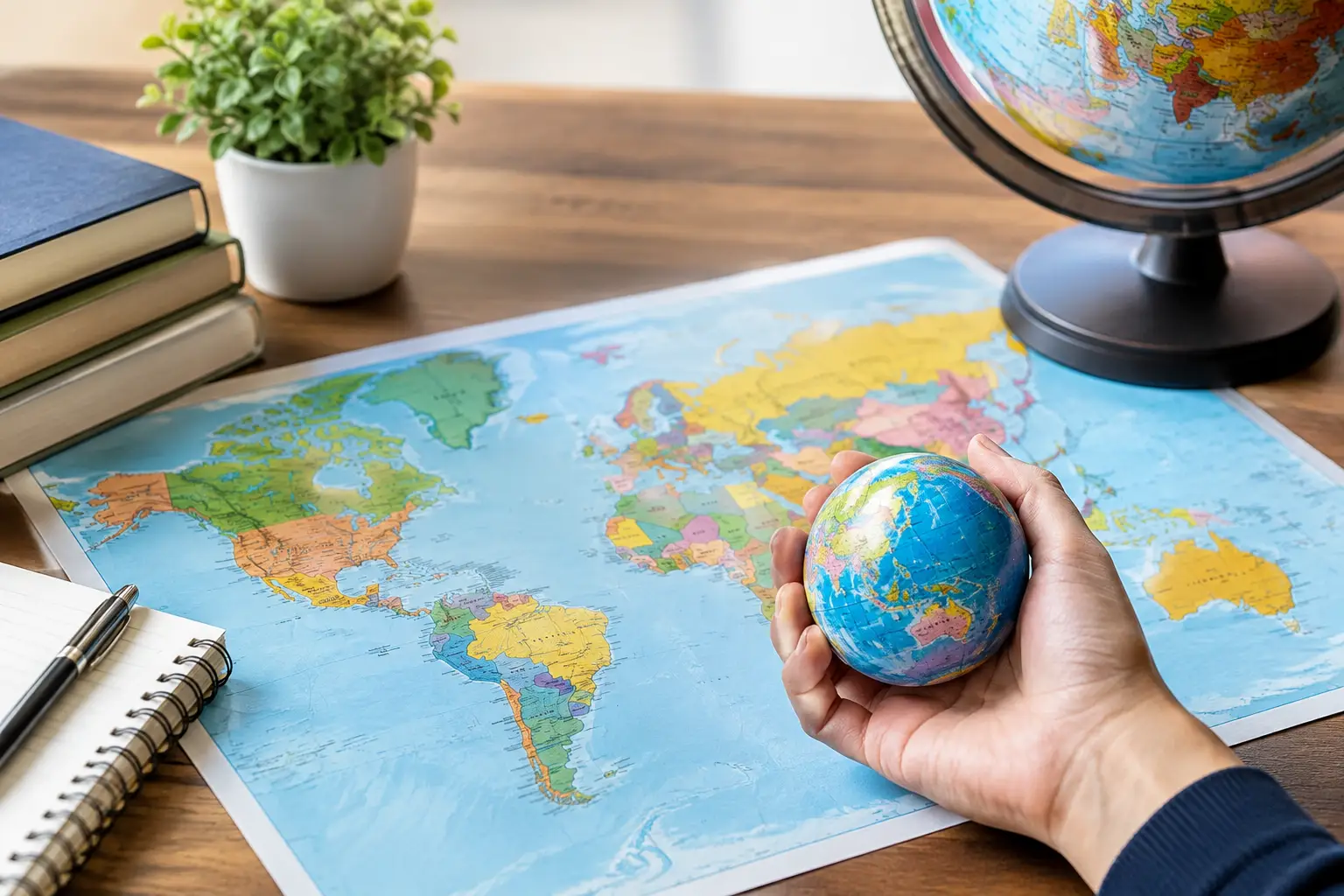
A country can be more than a shape on a map or a capital you once memorized for class. It has a flag, neighboring nations, languages, coastlines, landmarks, and stories. The best country facts quizzes turn those details into quick challenges that make you want to know the answer - then remember it next time.
That is the difference between scrolling through trivia and playing a geography game. A good quiz gives your brain a reason to care. You make a guess, notice a clue, get something wrong, and connect the correction to a place. A few minutes later, you are not just holding a fact. You are building a clearer picture of the world.
Why country facts quizzes work
Geography can feel huge when it is presented as a long list of countries, capitals, and borders. Quizzes shrink the task. Instead of trying to learn everything at once, you focus on one question: Which country is this? What is its capital? Which direction would you travel from Brazil to Ghana?
That small decision matters. Retrieving an answer from memory is more effective than simply rereading it. Even an incorrect guess can help, as long as you see the right answer quickly and understand the clue that pointed there. A flag with a distinctive symbol, a capital with an unusual spelling, or a country positioned between familiar neighbors gives the fact somewhere to live in your memory.
Short quiz sessions also fit real life. You do not need an hour, a textbook, or a complicated study plan. A daily challenge can fill the gap while coffee brews, between classes, or before you start work. The habit is small, but the knowledge compounds.
The quiz formats that teach more than trivia
Not every geography question creates the same kind of learning. The strongest country facts quizzes use different formats because countries are easier to remember when you meet them from more than one angle.
Flag questions build fast visual recognition
Flags are one of the quickest entry points into country knowledge. Colors, stripes, stars, crests, and shapes create visual hooks that are easier to recall than a plain name on a list. A partially hidden flag adds a useful layer of challenge: you have to notice what remains visible and make the best guess from limited information.
Flag questions do have a trade-off. Similar designs can be genuinely tricky, especially when countries share colors or historical influences. That is not a flaw. It is an opportunity to look closer. The difference between a centered emblem, a shade of blue, or the direction of a triangle can become the detail that separates two countries in your memory.
Capital quizzes connect names to places
Knowing that Canberra is Australia’s capital or that Ankara is Türkiye’s capital gives a country more definition. Capitals are especially useful for travelers, students, and trivia players because they appear often in news, sports, history, and culture.
Still, capital questions work best when they are not treated as isolated flashcards. Pair the answer with location, region, or a memorable clue. If you know that Wellington sits at the southern end of New Zealand’s North Island, the name becomes part of a map rather than a fact floating on its own.
Mystery-country clues reward reasoning
A clue-based country game asks you to connect pieces of information. You might get a continent, a border, a language, a geographic feature, or a population clue. The goal is not always instant recognition. It is narrowing the possibilities.
This format is great for players who already know some basics and want to use them actively. It also makes mistakes more interesting. If you guessed Bolivia but the country has a coastline, you have learned a rule that changes your next guess. Each clue becomes useful beyond one round.
Distance and direction questions make maps feel real
Where a country sits relative to another country is one of the most practical geography skills. Is Japan east of South Korea? Which country is closer to Italy: Greece or Morocco? These questions move learning beyond labels and into spatial thinking.
Distance games are harder at first because they ask for a mental map, not just recall. But they are also rewarding. Once you start estimating direction and scale, maps stop looking like a collection of separate answers. You begin to see routes, regions, and connections.
How to get better at country quiz games
The fastest way to improve is not to chase a perfect score every round. Play with attention. When you miss a question, pause for a moment and identify the clue you overlooked. Was it the flag’s symbol? A neighboring country? The fact that the capital was on the coast rather than inland?
Use a simple three-step routine: guess, check, connect. Make your best answer before revealing the result. Check the correct answer without rushing past it. Then connect it to one additional detail, such as its region, flag colors, or a nearby country. That extra connection takes seconds and makes the answer far easier to retrieve later.
Variety helps, too. If you only play flag quizzes, you can become excellent at flags while still struggling to place countries on a map. Mix visual questions with capitals, clue rounds, and distance challenges. Different modes expose different gaps, and each one supports the others.
It also helps to accept that some questions are designed to be difficult. A daily puzzle should not always be an automatic win. The fun comes from spotting patterns, taking a calculated guess, and seeing whether your logic held up. A close miss often teaches more than an easy answer.
Make a daily geography habit without making it homework
The best routine is one you will actually repeat. Keep it light. One daily quiz is enough to create momentum, especially if the challenge is shared with other players. Knowing that everyone is tackling the same country can make a short game feel more social, even when you play alone.
Set a personal goal that rewards consistency rather than perfection. Try a seven-day streak. Keep track of countries that surprise you. Compare a score with a friend, but do not turn every round into a test of who knows more. Friendly competition works best when it keeps curiosity high.
For teachers and parents, country quizzes can be a useful warm-up or conversation starter. Ask one follow-up question after the answer appears: What continent is it in? Which countries border it? What detail made the flag recognizable? The goal is not to turn a game into a lecture. It is to give a new fact one more place to stick.
What makes a great country quiz
A great geography quiz is clear, quick, and fair. You should understand the challenge immediately, make a meaningful guess, and learn something whether you win or lose. Complicated rules and endless setup get in the way of that.
Fresh questions matter, but so does thoughtful repetition. Seeing a country again in a new format is not boring when the clue changes. First you recognize its flag. Later you identify its capital. Then you place it between neighbors. That repetition is how separate facts become usable knowledge.
Accessibility matters as well. Free, browser-based games with no account required make it easier to play when curiosity strikes. Flagdle uses that low-friction approach across flags, capitals, mystery-country clues, and map-based challenges, so players can build a geography habit without downloading an app or handing over personal details.
The next country you miss is not proof that you are bad at geography. It is a new landmark for your mental map. Take the guess, notice the answer, and come back tomorrow with one more piece of the world in place.