Capitals Quiz Game for Smarter Daily Geography
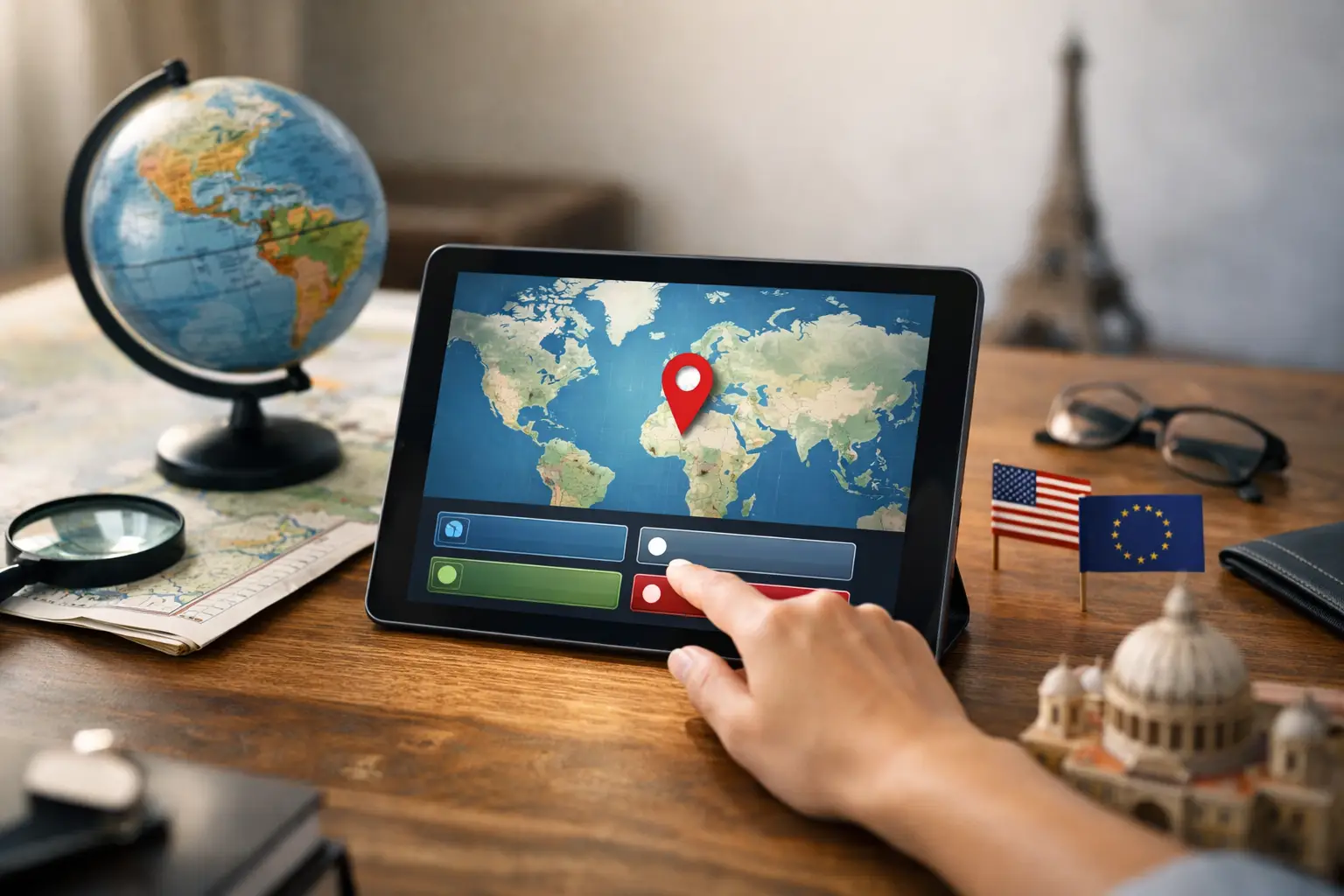
The answer feels obvious until the timer starts: What is the capital of Kazakhstan? A capitals quiz game turns that small moment of pressure into a useful habit. You are not memorizing a worksheet for a grade. You are building a quicker, clearer mental map of the world - one city, one country, and one satisfying correct answer at a time.
That is what makes capital trivia work so well as a daily game. It is quick enough for a coffee break, challenging enough to make you think, and varied enough that there is always another fact waiting beyond the next guess. A capital you miss today can become the answer you recognize instantly next week.
Why a capitals quiz game sticks
Country capitals are more than isolated facts. They connect places to news stories, travel plans, history, sports, food, languages, and people. When you learn that Abuja is the capital of Nigeria or that Wellington is the capital of New Zealand, you give the country a more detailed place in your memory.
A game format makes that connection easier to repeat. Instead of facing a long list of countries and cities, you get one clear question with a simple goal: make your best guess. The immediate feedback matters. A correct answer gives you a small win. A missed answer gives you a specific fact to remember next time.
Daily play is especially effective because it spaces out the learning. Seeing a fact once may be enough to recognize it later, but returning to it across several games helps move it from short-term recall into longer-lasting knowledge. You do not need an hour-long study session. A few focused minutes, repeated often, can do more than a single cram session.
There is also a healthy kind of uncertainty in capitals. Some answers are widely known, such as Paris, Japan's capital Tokyo, or Mexico City. Others challenge assumptions. Australia’s capital is Canberra, not Sydney. Turkey’s capital is Ankara, not Istanbul. South Africa has three capitals, depending on the branch of government. Those surprises are exactly what make the subject memorable.
How to play a capitals quiz game well
Start with your first instinct, but do not let it become a random guess. Look for the geographic neighborhood. If the country is in Central Asia, Eastern Europe, the Caribbean, or West Africa, pause for a second and mentally group it with nearby countries. Location creates useful clues, even when you cannot recall the answer immediately.
It also helps to learn capitals in small regional clusters. Rather than trying to absorb every country at once, spend a few days noticing patterns. The Baltic capitals are Tallinn, Riga, and Vilnius. In mainland Southeast Asia, think of Bangkok, Vientiane, Phnom Penh, Hanoi, and Naypyidaw. These are not rules that solve every question, but groups give your memory somewhere to attach new information.
When you get an answer wrong, avoid treating it as a dead end. Say the correct country-capital pair once in your head, then connect it to one extra detail. For example: Bishkek is in Kyrgyzstan, near the mountains of Central Asia. The detail does not need to be perfect or elaborate. It just gives the answer a hook.
Do not overfocus on speed, either. Fast answers are fun, especially when comparing scores with friends, but accuracy builds the foundation. If a game offers hints, use them strategically. A hint can keep a difficult round moving and teach you something new. On the other hand, using a hint before thinking through the region can skip the part that strengthens recall. The best balance depends on whether you are playing for a personal best, a classroom challenge, or simple daily learning.
Build a five-minute routine
The easiest geography habit is one that does not require setup. Play a daily capital challenge at the same natural break in your day: before class, during lunch, after work, or while waiting for the kettle to boil. A regular cue makes the game easier to remember than relying on motivation alone.
After the round, spend another minute with the questions that slowed you down. You can mentally replay the answer, compare it with nearby countries, or write down one capital that surprised you. Keep it light. The goal is not to turn a quick game into homework. It is to make each round leave a trace.
If you play with other people, share the score without making the game feel like a test. A friend who knows Caribbean capitals may miss several in Africa, while someone else has the opposite strength. That variety makes comparison more interesting and gives everyone a reason to come back tomorrow.
The questions that make geography better
A good capitals game should include a real mix of difficulty. If every question is a familiar answer, the game becomes automatic. If every question is extremely obscure, it becomes frustrating. The sweet spot includes quick wins, a few confidence-checking traps, and some answers that send you looking at a map afterward.
It should also respect the messy parts of geography. Not every capital is the largest city. Not every country has one straightforward capital. Some countries have changed capitals, use different administrative centers, or have official and practical distinctions. These exceptions are not flaws in the game. They are reminders that the world does not always fit into a neat flashcard.
For example, Sri Jayawardenepura Kotte is Sri Lanka’s official capital, while Colombo remains its commercial center and is the city many people recognize first. Bolivia’s constitutional capital is Sucre, while La Paz is the seat of government. Knowing the distinction is more useful than simply memorizing one answer without context.
That nuance is why feedback matters. A strong game does not just mark an answer right or wrong. It helps players understand the answer they will see again, whether through a map, a clue, a related country fact, or a chance to practice it in another mode.
Make the game social without making it stressful
Daily puzzles work because everyone gets the same challenge. You can compare your result with a sibling across town, a classmate, or a coworker without needing to be online at the same time. The shared question creates an easy conversation: Did you know that one? How did you get it so quickly?
Friendly competition is useful when it encourages curiosity instead of embarrassment. Share a streak, celebrate a tough answer, or make a low-stakes rule that each player teaches the group one new fact from the round. A missed question becomes part of the fun when it gives everyone something to learn.
For teachers and parents, capital games can work as a short warm-up or transition activity. The key is to keep the stakes low. Let players think first, accept that some capitals are unfamiliar, and use the result as a starting point for discussion. A student who misses Maputo may remember it much better after connecting it with Mozambique on a map.
Play for knowledge, not just a streak
Streaks are motivating, but they should not be the only measure of progress. If you are seeing more countries and cities with confidence, recognizing regional patterns, or getting curious about places you had not considered before, the game is doing its job.
Flagdle makes that kind of practice easy by placing capital challenges alongside flags, country clues, distance-and-direction play, and other quick geography games. Switching formats can be especially useful when one fact refuses to stick. A country’s flag, location, and capital can reinforce each other better than repeating the same question alone.
Keep the routine simple: show up, make a real guess, notice what surprised you, and come back for the next challenge. Before long, a city name that once felt like trivia becomes part of how you see the world.