Which Clues Reveal Countries? A Geography Guide
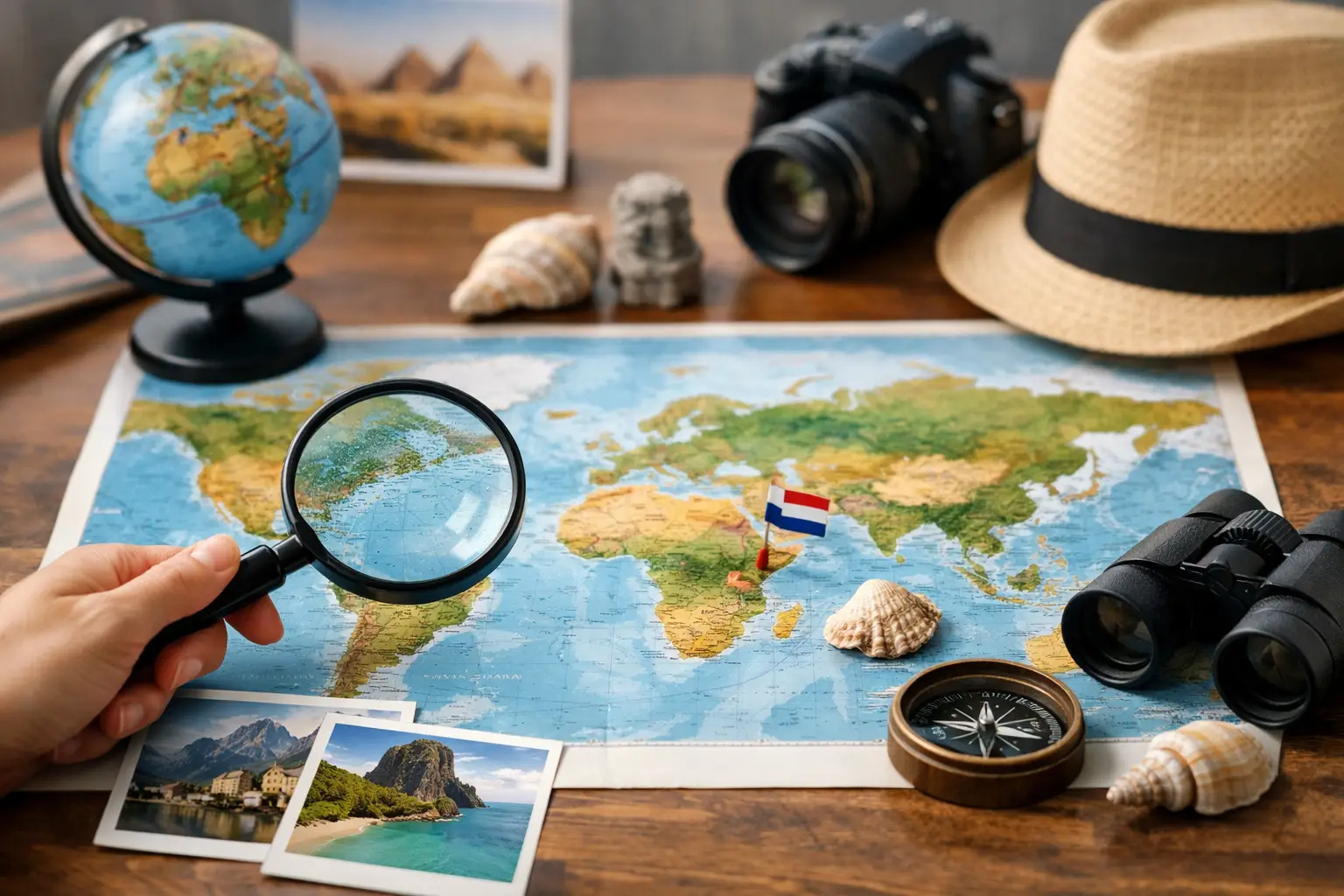
A half-hidden flag, a blurry road sign, three capital-city hints - country puzzles rarely hand you the answer. The fun is figuring out which clues reveal countries before the clock, your guesses, or your confidence runs out. A good player does not memorize every fact at once. They learn to notice the small signals that narrow a whole world down to one place.
That skill gets better quickly. Start with the clues that rule out the most options, then use details to confirm your hunch. Whether you are solving a daily flag game, a map quiz, or a travel-trivia question, this approach makes every guess more informed.
Which clues reveal countries fastest?
The fastest clues are usually the ones with the fewest possible answers. A national flag with an unusual shape, a distinctive alphabet, or a well-known landmark can point to a country almost immediately. Other clues, such as green hills or a red-white-blue color scheme, are useful only when paired with something more specific.
Think in layers. First, identify a region. Next, look for a clue that separates nearby countries. Finally, check whether the answer fits every detail you have. This is more reliable than jumping to the first country that comes to mind.
Flags: Start with the big patterns
Flags are one of the best country clues because they pack color, symbols, history, and geography into a small space. But colors alone can be a trap. Red, white, and blue appear on dozens of flags, while green, yellow, and red are common across several regions.
Look for structure before color. Is there a single vertical band, a diagonal stripe, a centered emblem, a Nordic cross, or a triangle at the hoist? Does the flag have an off-center design? Is it square rather than rectangular? Nepal is the famous answer when the outline itself is unusual, while Switzerland and Vatican City stand out for square flags.
Then inspect symbols. A cedar tree strongly suggests Lebanon. A maple leaf points to Canada. A sun with a face may lead to Argentina or Uruguay, so the surrounding stripes matter. A star count can help, but do not rely on it unless you can actually see it clearly.
In a partial-flag puzzle, ask a simple question: what could this visible piece not belong to? A narrow black-and-white diagonal stripe, for example, eliminates far more options than a plain blue field.
Writing systems: Read the shapes, not just the words
You do not need to speak dozens of languages to use a script as a clue. The overall shape of writing can reveal a lot. Greek letters suggest Greece or Cyprus. Hangul blocks point to South Korea. Thai script has rounded, looping forms. Japanese may combine several writing styles in one sign, while Arabic flows from right to left.
This clue has limits. Arabic appears across North Africa, the Middle East, and beyond. Cyrillic is used in multiple countries. English tells you very little on its own. The useful move is to combine script with local language details, road markings, flag colors, terrain, or a recognizable place name.
Even a few letter patterns can narrow the field. Accents, double vowels, endings such as “-stan,” or words like “república” and “jalan” can put you in the right neighborhood. If the text is too blurry to read, its script can still be enough for a smart regional guess.
Roads, signs, and vehicles: Everyday details matter
Street-level clues are often less flashy than flags, but they can be powerful. Start with driving side. Cars traveling on the left reduce the possibilities quickly, especially when paired with English, tropical scenery, or a particular style of license plate. Cars on the right are more common, so you will need another detail.
Road signs also carry local habits. Warning signs may be diamonds, triangles, or other shapes. Center lines and curb colors vary. Some countries use distinctive utility poles, bus stops, bollards, or painted storefronts. License plates can be especially useful when their colors or layouts are clear, though a single plate should not be treated as final proof.
Watch for contradictions. Palm trees do not automatically mean an island nation. A European-style road sign does not guarantee Europe. Countries share infrastructure through history, trade, and regional standards. Use the road as a supporting clue, not your only clue.
Build a country answer from geography
Landscapes are great for narrowing the map, but they are rarely enough by themselves. Snowy mountains could mean Chile, Switzerland, Nepal, Canada, or many other places. Dry grassland could be southern Africa, Central Asia, Australia, or parts of the Americas.
The winning detail is often the combination. High mountains plus Spanish-language signage may point toward the Andes. Flat land, bicycles, Dutch-style architecture, and dense water management tell a much clearer story than any one clue alone. Volcanic slopes, tropical vegetation, and Japanese road signs create another strong combination.
Coastlines matter too. Look for the type of water, harbor style, fishing boats, cliffs, and urban density. A crowded Mediterranean waterfront feels different from a windswept North Atlantic village. Still, feel is not evidence. Use it to create a short list, then find a detail that proves it.
Architecture and city design
Buildings can reveal climate, materials, religion, and history. Colorful colonial facades may suggest Latin America or the Caribbean. Onion domes can point toward Eastern Europe or Russia. Stilt homes, tiled roofs, stone walls, and high-rise skylines all provide context.
But architecture travels. A mosque does not identify one country. A British colonial building may appear far from Britain. Instead, look at the full streetscape: building height, storefront language, pavement, traffic, public transit, and the way homes are arranged. The answer is usually in the pattern, not one dramatic building.
Food, clothing, and cultural symbols
Food and clothing can make a trivia question easier, especially when the clue is deliberately iconic. Sushi is associated with Japan, a maple leaf with Canada, and a Maasai shuka with Kenya or Tanzania. Yet these clues deserve extra care. Dishes cross borders, cultural groups span national boundaries, and stereotypes can flatten real places into a single image.
Use cultural clues respectfully and specifically. If a question mentions a dish, look for ingredients, spelling, language, or a city connection. If it shows traditional clothing, ask whether the garment belongs to one nation, a region, or a wider community. Geography is more interesting when it is accurate.
A quick method for daily geography games
When you only have a few guesses, avoid the temptation to make three random attempts. Use each try to learn something. First, form a regional hypothesis. Is the clue more likely European, Caribbean, Southeast Asian, or West African? You do not need certainty yet.
Second, choose a country that tests your best idea. If the game gives directional or distance feedback, use it as data rather than a verdict. A guess northwest of the answer can eliminate huge sections of the map. If you are playing a flag puzzle, use your first guess to compare flag structure, colors, and symbols against the part you can see.
Third, reassess. What clue did you overlook? What no longer fits? Good geography players change their minds when the evidence changes. That is not a bad guess. It is how the puzzle works.
A simple mental checklist helps when you get stuck: flag design, writing system, driving side, terrain, architecture, and language. You do not need all six. Two or three independent clues are often enough to make a confident answer.
Learn patterns, not just answers
Memorizing a country after you miss it is useful, but memorizing why you missed it is better. Maybe you confused similar flags. Maybe you saw Cyrillic and assumed Russia. Maybe you forgot that several countries drive on the left. Name the pattern, and it becomes easier to spot next time.
Daily games are ideal for this kind of learning because the challenge is short. One new flag, capital, map position, or mystery-country clue each day adds up without feeling like homework. Flagdle turns that practice into a quick shared puzzle, but the real win is the moment a small clue suddenly means something.
Next time a country question looks impossible, pause before guessing. Find one clue that narrows the region, one that separates the candidates, and one that confirms your choice. The world starts feeling much more recognizable, one detail at a time.