Three Guess Flag Challenge: Why It Works
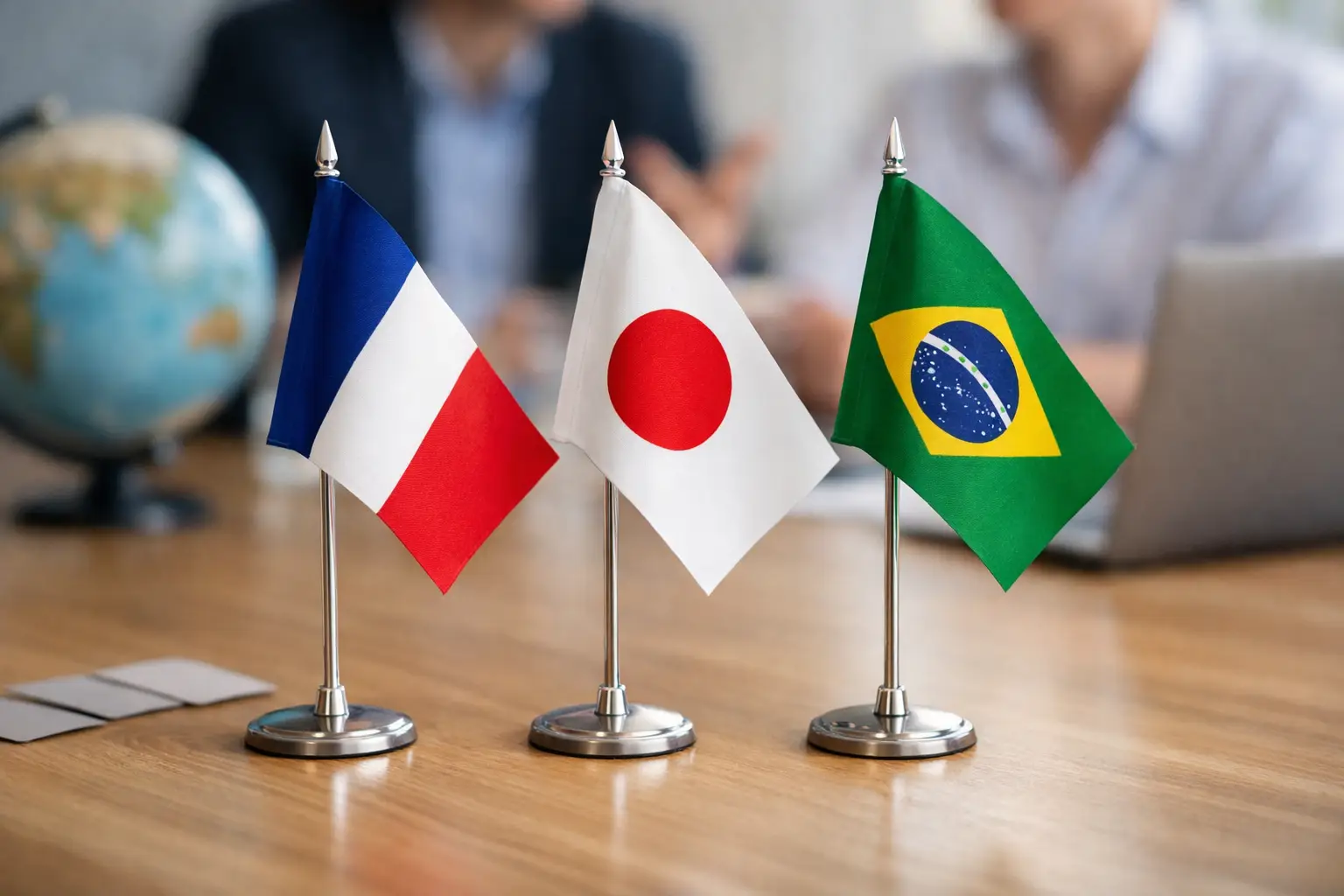
You know the feeling: one glimpse of a flag, one confident guess, and then the tiny moment of doubt when you realize stripes and stars can get very confusing very fast. That tension is exactly why the three guess flag challenge works so well. It is quick enough to play in under a minute, but sharp enough to make you care about the result.
That balance is harder to design than it looks. Give players unlimited guesses, and the game loses urgency. Make it one-and-done, and it becomes more punishing than fun. Three tries lands in the sweet spot. It gives you room to think, recover from a bad read, and still feel the pressure of a real challenge.
What makes a three guess flag challenge different
Plenty of trivia games test what you know. A three guess flag challenge tests what you notice. Those are not the same skill.
When a flag is partly hidden or shown with limited information, you are not just pulling a country name from memory. You are comparing patterns, colors, symbols, and proportions. Is that a tricolor with equal bands, or does the center emblem change everything? Is that red-white-red Austria, or red-white-red with a crest that points you somewhere else entirely? The game turns recognition into reasoning.
That is what gives the format staying power. It is not pure memorization, and it is not random guessing either. Good players start seeing structure. They learn which flags are often confused, which details matter most, and how to rule out lookalikes fast.
Why three guesses feels fair
A lot of casual games fail on one simple point: they ask for too much commitment before they prove they are fun. A three guess flag challenge avoids that problem because the rules are instantly clear. You see a flag. You guess. You get up to three tries. That is the whole pitch.
It also feels fair because everyone is working under the same limit. There is no long tutorial, no account setup, no skill tree, and no hidden advantage. You either recognize the clue, make a smart deduction, or learn something for next time.
That fairness matters more than people think. Daily games are built on trust. If a challenge feels arbitrary, players stop coming back. If it feels consistent, even a miss can be satisfying. You lost, but you know why you lost.
The pressure is real, but small
Three guesses creates just enough pressure to make the outcome matter. One wrong answer does not end the run. Two wrong answers raise the stakes. By the third try, even a simple flag can feel dramatic.
That small burst of tension is a big part of the appeal. It gives the game a shape. Without pressure, the result is forgettable. With too much pressure, the result feels annoying. Three guesses is the middle ground where challenge stays fun.
Why this format teaches geography better than it looks
A good geography game does not feel like homework. It sneaks learning in through repetition, recognition, and a little competition. The three guess flag challenge does exactly that.
Every round builds pattern memory. You start noticing that Nordic crosses follow one visual family. You remember that several countries share pan-Arab colors, but use them differently. You learn that small changes in symbol placement can mean the difference between a right answer and a near miss.
That kind of learning sticks because it happens under light pressure. Your brain pays attention when a choice matters. Miss a flag once, and you are much more likely to remember it the next time.
There is also a nice side effect: players often move from flags into broader geography. Once you know a country’s flag, you start caring about where it is, what its capital is, and how it connects to nearby places. A simple daily puzzle can open the door to a bigger map.
The social side of the three guess flag challenge
Part of the fun is that everybody gets the same puzzle. That shared daily structure turns a solo game into a small social event.
You can compare results with friends, classmates, or coworkers without needing a complicated multiplayer mode. Did you get it in one? Did someone else burn all three guesses on a flag they should have known? Those tiny score comparisons are enough to make the game more memorable.
This is where daily geography games have a real edge. They are easy to talk about. The format is simple, the stakes are low, and the outcome is shareable. You do not need a 20-minute match or a deep ruleset to create friendly competition. You just need one good prompt and a clear result.
What makes a good flag challenge hard in the right way
Not every flag makes for a satisfying puzzle. Some are distinctive at a glance. Others are so similar that they can feel unfair unless the game presents the clue carefully.
A good three guess flag challenge needs the right kind of difficulty. The best rounds reward attention, not obscure trivia. If the answer depends on a tiny emblem you can barely see, that can feel cheap. If the answer is obvious from the first second, the challenge disappears.
The sweet spot is a flag that gives you enough to reason with. Maybe the colors narrow the field. Maybe the layout points to a region. Maybe one symbol confirms the answer if you know what to look for. That mix lets new players participate while still giving experienced players something to solve.
There is a trade-off between accessibility and depth
This is where design choices matter. If the game leans too easy, regular players get bored. If it leans too niche, newer players bounce off. The best daily formats keep the entry point open while leaving room for skill to show.
That is one reason a lightweight browser game works well here. You can jump in instantly, take your best shot, and come back tomorrow a little sharper than before. No friction, no long setup, just a fast loop that rewards consistency.
Why people keep coming back every day
Daily games live or die on habit. The three guess flag challenge fits that routine because it respects your time.
You are not being asked to commit to a long session. You are being offered a quick test with a clean finish. That makes it easy to slot into a morning break, a class warm-up, a commute, or a few spare minutes between tasks.
The daily reset helps too. It removes the pressure to grind. You play today’s round, compare how you did, and move on. Tomorrow brings a fresh puzzle and another chance to improve.
That rhythm is simple, but powerful. A lot of people want entertainment that feels active instead of passive. They want something short that still gives their brain a nudge. A daily geography challenge does exactly that.
Who gets the most out of it
The nice thing about this format is that it works across skill levels. Students can use it as a low-stress way to build country recognition. Teachers can use it as a warm-up that gets a room engaged fast. Trivia fans get a daily test of recall. Travelers and map nerds get the satisfaction of seeing obscure knowledge actually pay off.
Even people who think they are bad at geography usually find a way in. Flags are visual. You do not need to memorize a textbook to start noticing recurring designs and regional patterns. Improvement feels visible, which makes the game more rewarding.
That broad appeal is part of why platforms like Flagdle feel sticky. The challenge is specific, but the audience is wide. If you like quick games, learning by playing, or comparing scores with friends, the format makes sense almost immediately.
The best part is what happens after a wrong guess
A wrong answer is not dead time. It is feedback.
Maybe you guessed Ireland when the correct answer was Ivory Coast and realized the color order matters. Maybe you mixed up Monaco and Indonesia and now you will never forget the shape and ratio issue again. Those near misses are where the learning happens.
That is why the three guess flag challenge has more staying power than a random trivia prompt. It creates tiny corrections in your mental map. A few seconds of effort today can make the next round easier, and the round after that even better.
If a game can make you pause, think, laugh at your own bad guess, and come back tomorrow a little smarter, it is doing something right. That is a pretty good reason to keep guessing.