Guess Country Games That Keep You Coming Back
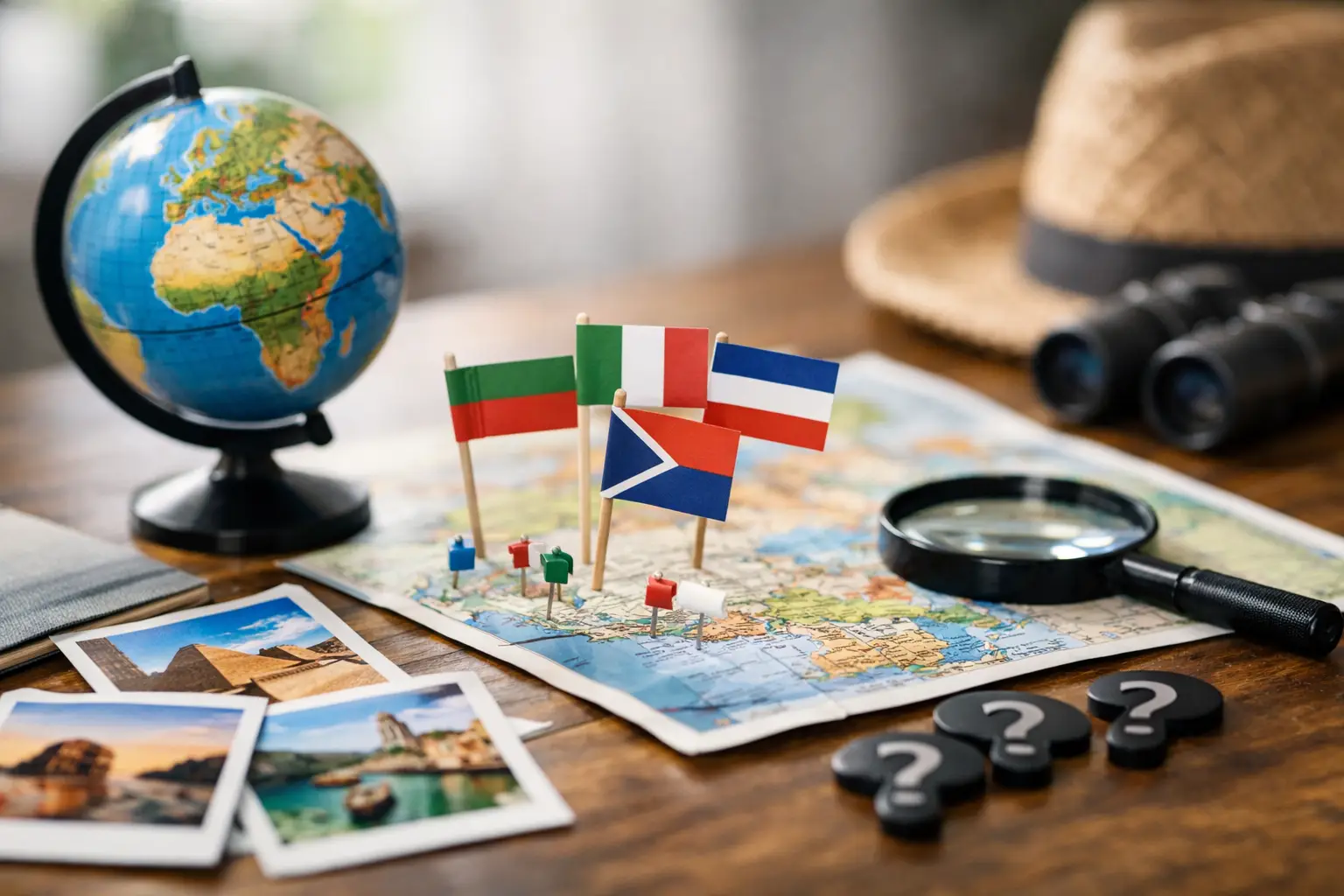
A good guess country game does something most trivia apps miss - it gives you just enough information to feel close, then makes you earn the answer. One flag color, one capital hint, one directional clue, and suddenly you are mentally scanning the map. That tension is the fun. It is also why these games stick.
Geography works especially well in short daily play because the subject is broad, visual, and surprisingly personal. People remember places they have visited, countries they have read about, flags they saw during the Olympics, and capitals they mixed up in school. A fast puzzle taps into all of that at once. You are not just recalling facts. You are testing patterns, memory, and instinct.
Why guess country games work so well
The best daily games are easy to start and hard to shake. Guess country puzzles fit that model almost perfectly because the rules are simple, but the knowledge behind them is huge. You can explain the challenge in a sentence, yet no two rounds feel exactly the same.
There is also a nice balance between skill and surprise. If a game gives away too much, it becomes routine. If it gives away too little, it turns into random clicking. Geography sits in the middle. A red-and-white flag could be several countries. A capital in West Africa narrows the field, but not enough to make it automatic. A distance clue helps, but only if your mental map is decent. That uncertainty keeps the round alive.
Daily format matters too. One shared puzzle creates a small event. Everyone gets the same challenge, which makes scores more meaningful and results more shareable. You are not grinding through endless random quizzes. You are showing up for today’s test.
Guess country is more than a trivia prompt
At first glance, “guess country” sounds basic. In practice, it can mean several different kinds of play, and that range is part of the appeal.
A flag-based round is visual and immediate. You notice colors, shapes, symbols, and stripe patterns before you even start naming possibilities. A capital-based round leans verbal. You hear a city name in your head and try to connect it to a nation. A mystery-country format turns the game into deduction, where each clue cuts away part of the map. Distance-and-direction modes add logic. You are no longer asking, “Do I know this?” You are asking, “What sits northeast of my last guess, about 1,200 miles away?”
These are all geography games, but they train different muscles. That is why people who think they are “bad at geography” often surprise themselves. They may not remember every capital, but they are good with flags. Or they may miss symbols and colors, yet do well when direction and proximity enter the picture.
That mix keeps the category fresh. It also makes improvement feel real.
Why daily geography beats endless scrolling
A lot of digital entertainment asks for very little and gives very little back. You spend ten minutes, then barely remember what you watched or tapped. A quick geography game feels different because the time has a clear shape. You start with a question, make a few decisions, and finish with an answer.
That small loop is satisfying on its own, but it also builds over time. A country you missed last week is easier this week. A flag you always confused starts to stand out. You begin to recognize regional patterns - stars and crescents, pan-African colors, Nordic crosses, horizontal tricolors that are not as interchangeable as they first seem.
This is one reason short daily play works better than marathon study for many people. You are not trying to memorize a textbook page. You are revisiting the subject in tiny, repeatable moments. The learning sneaks in because the game gives your memory a reason to care.
What makes a guess country game actually good
Not every geography game earns a daily habit. Some are cluttered, some are too easy, and some mistake obscurity for challenge.
A strong guess country experience starts with low friction. It should be fast to load, easy to understand, and playable right away. No account wall. No long tutorial. No need to install anything just to answer one question. If the game is meant to fit into a morning routine or a quick break, every extra step works against it.
Fairness matters just as much. A puzzle should be challenging, but the clues need to reward attention. If the answer feels arbitrary, players stop trusting the format. If the same countries appear too often, the game starts to feel narrow. If the difficulty swings wildly without logic, winning feels lucky and losing feels cheap.
Variety helps keep things honest. Flags alone are fun, but flags plus capitals, mystery clues, and map-based deduction create a fuller geography loop. One mode might test recognition. Another tests reasoning. Together they keep the experience from flattening out.
That is where a platform like Flagdle makes sense. Instead of treating “guess country” as one gimmick, it turns it into a compact set of daily geography challenges that stay quick, free, and easy to revisit.
The real skill behind better guesses
People often talk about geography like it is pure memorization, but that is only part of the story. Good players usually develop a few practical instincts.
First, they learn to eliminate. If a flag has a cedar tree, you are in a very different lane than if it has a dragon or a Southern Cross. If a clue points to a landlocked country in Central Asia, half the world is already gone. Fast progress comes less from instant certainty and more from shrinking the possibilities.
Second, they start noticing regional families. Once you see enough flags, capitals, and neighboring countries, the map gains structure. South American capitals begin to feel distinct. Caribbean nations stop blending together. The Balkans become less of a blur. You do not need perfect recall. You need enough pattern recognition to make smarter second and third guesses.
Third, they accept that some misses are useful. Confusing Chad and Romania, or mixing up Slovakia and Slovenia, is frustrating for about five seconds. Then it becomes sticky knowledge. The error itself helps lock in the difference. That is one of the quiet advantages of game-based learning. Wrong answers are not dead ends. They are memory markers.
It depends on what kind of player you are
If you want a calm, low-stakes daily puzzle, visual modes like flags are usually the easiest entry point. They are quick, intuitive, and satisfying even if your geography knowledge is rusty. If you like deduction more than recognition, mystery-country and distance-based formats may be a better fit. They feel more like solving than recalling.
Students and teachers often get extra value from this category because the rounds are short enough to use as warm-ups, breaks, or memory checks. Trivia fans tend to enjoy the shared daily challenge and score comparison. Travelers often like the way a quick game reinforces places they have seen or want to see.
There is no single best mode for everyone. The fun part is finding the format that keeps you curious enough to return tomorrow.
How guess country games build knowledge without feeling like homework
The magic is repetition without sameness. You are returning to the same subject every day, but through different surfaces - a flag, a capital, a clue set, a distance marker, a leaderboard result. That variation keeps the brain engaged. It also gives you multiple ways to store the same information.
Take Japan, for example. You might know the flag instantly. You might connect Tokyo without effort. You might place it correctly on a map after a directional clue. Each of those is a different doorway into the same answer. The more doorways you build, the faster recall becomes.
This is why short geography games can feel surprisingly productive. They respect your time while still asking you to think. Five minutes is enough for a real challenge, especially when the format is clean and the clue design is smart.
And because the game resets each day, there is no pressure to binge. Miss one round and you simply come back tomorrow. That makes the habit easier to keep.
The best guess country games are not trying to turn every player into a cartographer. They are doing something more useful for everyday life - making the world feel a little less abstract, one quick puzzle at a time. If a game can make you pause, think, learn, and want another round tomorrow, it is doing its job.