Geography Quiz: Fun, Fast Ways to Get Better
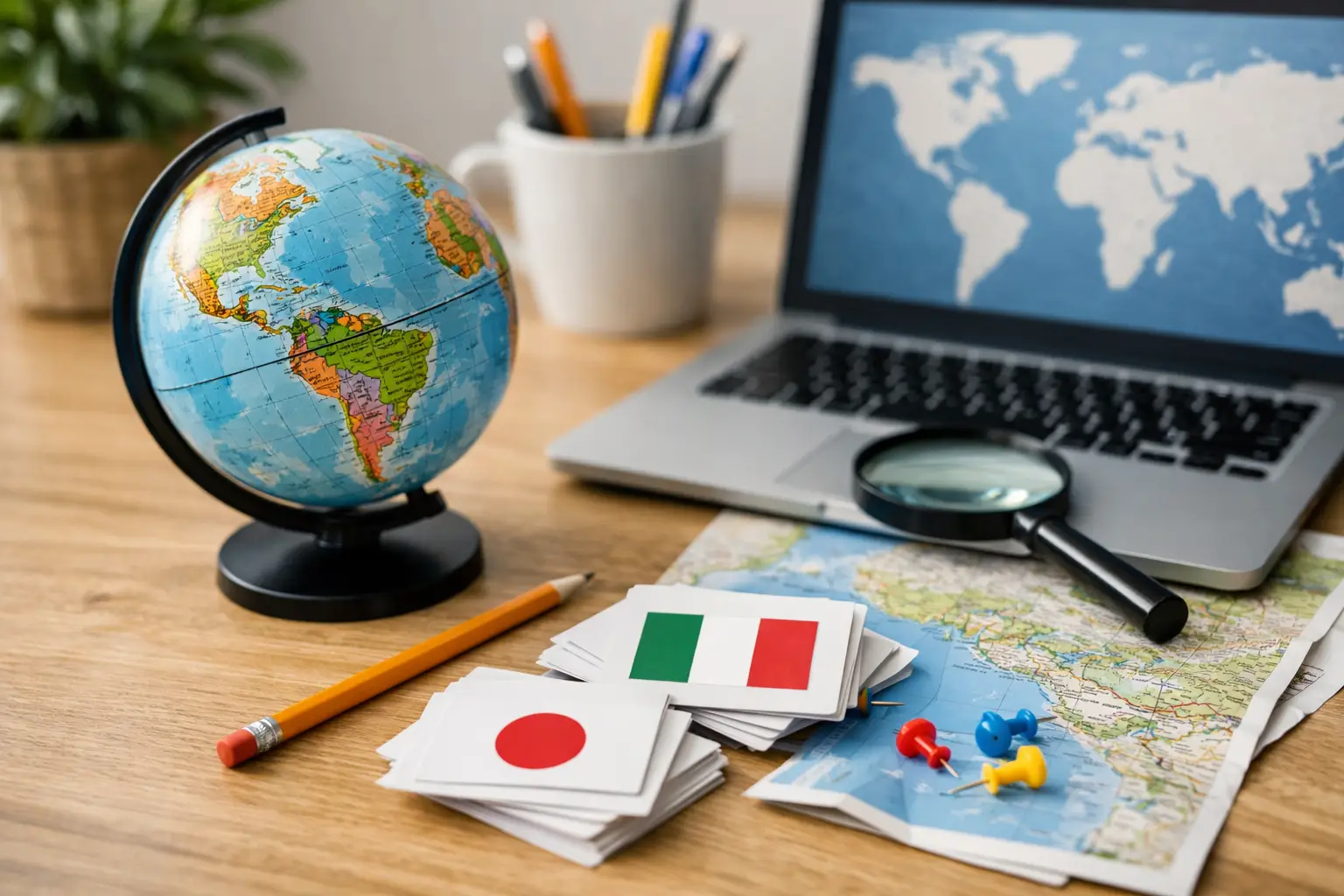
You can tell a lot about a geography quiz by the first question. If it asks for France on a map, that is one kind of challenge. If it gives you a flag fragment, a capital city clue, or the distance between two countries, that is a very different game. Both can teach you something. Only one usually gets you to come back tomorrow.
That is why the best geography quiz formats feel less like homework and more like a quick daily win. You get a clear prompt, a fair shot, and just enough pressure to make the answer stick. When the quiz is well designed, you are not memorizing random facts. You are building a mental map of the world one small decision at a time.
What makes a geography quiz actually worth playing?
A good geography quiz does three things fast. It gives you a clear task, it teaches without dragging, and it makes you want another round.
That sounds simple, but plenty of quizzes miss the mark. Some are too easy, so you click through on autopilot and forget everything five minutes later. Others are too broad, asking you to recall capitals, borders, flags, mountain ranges, and population rankings all at once. That can feel more like a cram session than a game.
The sweet spot is focused challenge. One round might ask you to identify a country from a flag. Another might test capitals only. Another could use directional hints or map position. Each mode trains a slightly different part of your geography knowledge, and together they build stronger recall than one giant mixed quiz ever could.
That is also why short sessions work so well. Most people are not looking for a 45-minute geography exam in the middle of the day. They want a quick brain reset that still feels rewarding. A daily format makes that even stronger because it turns learning into a habit instead of a one-time burst of motivation.
Why daily geography quiz games work better than random practice
There is a reason daily puzzle formats took off. They respect your time.
A daily geography quiz gives everyone the same challenge, which changes the experience. It becomes less about endless grinding and more about showing up, taking your shot, and comparing results. That shared rhythm matters. It adds a light social layer without turning the whole thing into a competition for people with unlimited free time.
Daily play also helps memory. If you see one country today, another tomorrow, and a capital the next day, you are using spaced repetition without needing a study plan. That sounds technical, but the effect is simple. Information sticks better when you revisit it over time instead of trying to force it all in one sitting.
There is one trade-off, though. Daily quizzes are great for consistency, but they are not always enough on their own if your goal is rapid improvement for a class, trivia night, or travel prep. In that case, a mix works best. Keep the daily challenge for habit, then add a few extra rounds in specific categories where you are weak.
The best geography quiz formats for learning
Not all quiz types train the same skill. That is good news, because geography is bigger than naming countries on a blank map.
Flag-based geography quiz games
Flags are visual, fast, and surprisingly sticky. Once you learn the difference between Romania and Chad, or spot Japan instantly from a clean design, that recognition tends to stay with you.
The downside is that flags can create false confidence. You might know the flag of Kenya without being able to place Kenya on a map or name Nairobi. So flag quizzes are excellent for recognition, but they work best when paired with other formats.
Capital city quizzes
Capital quizzes are strong for recall. They force you to retrieve an answer rather than recognize it from an image. That makes them harder, but often more effective.
The catch is that capitals can feel abstract if they are disconnected from location. Knowing that Ottawa is the capital of Canada is useful. Knowing where Canada sits relative to the US, Greenland, and the Atlantic gives that fact context.
Map and location quizzes
These are some of the most practical geography games because they train your internal world map. You are not just naming a place. You are placing it.
They can also be the toughest for beginners. If your map knowledge is shaky, a blank map can feel brutal. Hinted formats help a lot here, especially games that use nearby countries, regions, or directional clues to guide your guess.
Distance and direction games
This format feels especially game-like because every guess teaches you something. If your answer is wrong, the feedback still helps. You learn whether the target country is farther east, slightly south, or thousands of miles away.
That makes these quizzes forgiving in a smart way. Even a bad guess can improve your next one.
How to get better at a geography quiz without studying like it is school
The fastest way to improve is to stop treating geography as one giant subject. Break it into patterns.
Start with regions. Learn the shape of South America as a group. Notice which countries sit along the Mediterranean. Get familiar with island nations separately from landlocked ones. Geography becomes easier when places are connected to nearby places.
Then layer in one fact type at a time. Spend a few days on flags, then switch to capitals, then do map placement. That keeps your brain from blending everything together into noise.
Repetition matters, but variety matters too. If you only do one quiz type, you will get good at that specific mechanic and assume your overall geography is improving faster than it is. Sometimes that is true. Sometimes you are just learning the quiz.
A quick correction habit helps a lot. When you miss a country, do not just move on. Look at it for a few extra seconds. Notice the region, the flag colors, neighboring countries, or capital. Tiny review moments are often enough.
Common mistakes people make in geography quiz games
The biggest mistake is rushing because the quiz looks easy. Geography punishes overconfidence.
A lot of errors come from near-matches. Similar flags, similar country names, and nearby capitals trip people up constantly. Slovakia and Slovenia, Niger and Nigeria, Lithuania and Latvia - these are classic misses because your brain grabs the closest familiar option and runs with it.
Another mistake is relying on one clue only. If you see red, white, and blue on a flag and guess immediately, you are going to burn a lot of tries. The better move is to look for details - a crest, a stripe order, a star pattern, a symbol placement.
People also underestimate regional logic. If a clue points to a landlocked country in East Africa, your guess pool should shrink fast. If the distance hint places the answer southeast of Germany, that narrows things too. Good players are not necessarily memorizing more. They are eliminating better.
Who gets the most out of a geography quiz?
Pretty much anyone who likes a short challenge with a payoff.
Students can use quizzes to reinforce class material without opening a textbook again. Teachers can use them as warm-ups because the format is quick and easy to explain. Trivia players get sharper recall. Travelers build familiarity with places they have never visited. Even people who just like daily puzzle habits tend to stick with geography games because they feel productive without being heavy.
That broad appeal is part of why lightweight web-based quiz games work so well. No account. No setup. Just open the game and start. If the challenge is fair and the feedback is clear, people will come back on their own. That is a much stronger hook than trying to force commitment up front.
One good example is Flagdle, which keeps the format simple and replayable while expanding beyond flags into other country-based challenges. That variety matters because it turns one quick game into a small geography routine.
How to choose the right geography quiz for you
It depends on what keeps you engaged.
If you like instant visual recognition, start with flags. If you want stronger recall, capitals and map quizzes will push you more. If you enjoy logic and narrowing down clues, distance and direction formats are hard to beat.
You should also think about pace. Some people want endless rounds. Others do better with one daily challenge because it stays fresh and never feels like work. Neither approach is wrong. The best geography quiz is the one you will actually keep playing.
A final test is whether the game teaches you after a miss. If the wrong answer feels pointless, the design is probably weak. If every guess leaves you a little smarter, you found the right one.
Geography gets more interesting the moment the world stops looking random. A good quiz can make that happen in three guesses, one flag, or a single clue - and that is usually enough to make tomorrow's round feel worth it.