Best Flag Lessons for Students That Stick
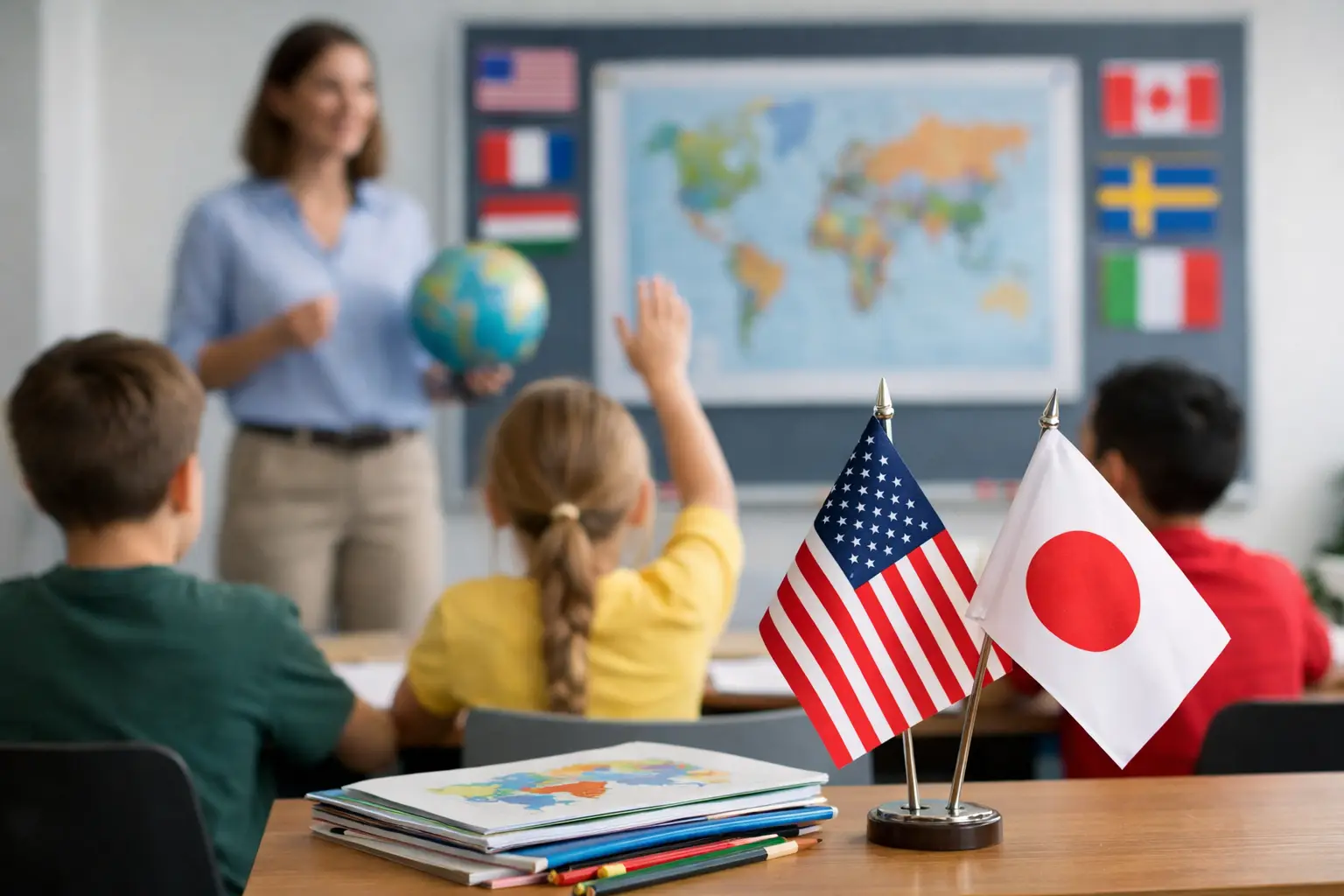
A flag worksheet can be finished in five minutes and forgotten by lunch. The best flag lessons for students do something different: they turn colors, symbols, and shapes into clues that students use again tomorrow. That is how a quick geography activity becomes knowledge that lasts.
Flags work especially well because they are visual, compact, and full of patterns. A student may first recognize Japan by its red circle, then remember its location, capital, neighbors, or culture through follow-up questions. The goal is not to memorize every flag in one sitting. It is to build recognition, curiosity, and a habit of asking, What country is that?
What Makes a Flag Lesson Worth Doing?
A strong flag lesson gives students a reason to look closely. Instead of presenting a country name beside a finished image, show a partial flag, a zoomed-in symbol, or several similar choices. That small challenge makes the answer feel earned.
The best activities also use retrieval. Students should try to recall an answer before seeing it. Repeatedly looking at a flag chart feels productive, but guessing, checking, and trying again creates a stronger memory. A little uncertainty is useful when it stays fun.
Context matters, too. Knowing that a flag belongs to Kenya is a good start. Knowing where Kenya sits in East Africa, what colors appear on nearby flags, and why its shield stands out gives the image more meaning. Keep the context brief and connected to the challenge. A long lecture can flatten the energy of a good game.
Five Flag Lesson Formats Students Actually Want to Play
1. The Daily Hidden-Flag Challenge
Reveal only part of a flag and ask students to make a guess. Give them three tries, then show the full answer with one memorable country fact. This format works because it creates a small daily ritual instead of a large study task.
Start with clearer flags for younger students or beginners. Japan, Canada, Brazil, and South Korea offer distinct visual hooks. As confidence grows, introduce flags that require closer attention, such as Romania and Chad, or Indonesia and Monaco. The point is not to trick students. It is to teach them which details matter.
A browser game such as Flagdle fits this format neatly: one shared flag challenge, a short round, and no account required. Students can compare results after they play, but the real win is returning with sharper eyes the next day.
2. Flag-to-Map Matching
Once students identify a flag, ask them to place the country on a blank map. This is where flag knowledge starts becoming geography knowledge.
Keep the map task focused. For a class learning South America, use only that continent rather than a full world map. Students can match five flags to five locations, then explain one placement out loud. A student who says, Chile is the long, narrow country on the west coast, has made a much stronger connection than someone who only circles the right answer.
For independent practice, use a simple two-step rule: identify the flag first, then find the country. Reversing the order occasionally is useful, too. Show a map location and ask for the flag. Switching directions prevents students from relying on one memorized cue.
3. Similar Flag Showdowns
Some of the most useful lessons come from flags that look almost the same. Put two or three similar flags side by side and ask students to spot the difference before naming the countries.
For example, Ireland and Ivory Coast use the same three colors in reversed order. Australia and New Zealand both feature the Union Jack and stars, but their star patterns differ. Romania and Chad are famously close, while the shade of blue is one distinction students may notice.
This activity teaches observation rather than random recall. It also opens a good discussion: flags are not just color combinations. Their order, symbols, proportions, and history can all carry meaning. Avoid treating close matches as gotcha questions. Let students inspect, debate, and correct themselves.
4. Clue-First Country Rounds
A flag can be the answer, not the starting point. Give students two or three clues about a country, then ask them to choose its flag from several options.
The clues should be specific enough to narrow the field without giving everything away. A round might mention an island nation in the North Atlantic, a capital called Reykjavik, and geothermal energy. Students make their best guess, reveal Iceland’s flag, and have a new reason to remember it.
This format is especially helpful for students who do not yet feel confident with visual recognition alone. It gives them multiple paths to an answer: location, capital, language, landmark, or regional knowledge. Over time, reduce the number of clues so the flag itself carries more of the challenge.
5. Student-Made Flag Quizzes
When students create questions, they stop being passive learners. Ask pairs or small groups to build a five-question flag round for classmates. Each question should include a flag image or description, the answer, and one short fact worth remembering.
Set a quality rule: facts need to help identify or understand the country, not just fill space. A useful fact might explain a symbol, name a neighboring country, or point to a major geographic feature. Then let groups trade quizzes and see which questions create the best discussion.
This works well as a short Friday activity or a review before a geography unit. It also gives teachers a clear view of what students know, confuse, or need to revisit.
Build a 15-Minute Flag Routine
Flag lessons do not need a separate period on the schedule. A consistent 15-minute routine can create more retention than one oversized quiz at the end of a unit.
Begin with a two-minute warm-up: one hidden flag or one familiar-versus-similar flag comparison. Give students quiet thinking time before taking answers. Fast responders should not control every round.
Use the next six minutes for the main challenge. Students can work alone, in pairs, or in small teams depending on the goal. Solo play measures individual recall. Pair work helps hesitant students explain their thinking. Teams add energy, but keep scoring light so accuracy matters more than shouting first.
Spend four minutes adding map context. Locate the country, name its region, and connect it to one nearby country or geographic feature. Finish with a three-minute exit prompt, such as drawing a flag detail from memory or writing one clue that would help someone else identify the country.
The next day, bring back one or two flags from the previous round. That quick return is where learning sticks.
Choose the Right Difficulty Level
The best flag lessons for students depend on age, prior knowledge, and the purpose of the activity. Elementary learners often respond well to bold designs, country stories, and map placement. Middle school students can handle regional comparisons and symbol meanings. High school students may enjoy tougher look-alike rounds, historical changes, and questions about national identity.
For mixed-age groups, offer layers instead of separate activities. Everyone identifies the same flag. Beginners choose from four country names, while advanced students locate it on a map and explain one visual feature. Students stay in the same game without being pushed into the same level.
Be thoughtful with scoring. A leaderboard can motivate some learners, especially in a daily game format, but it can discourage students who are new to geography. Rotate between personal bests, team goals, and cooperative class targets. Friendly competition works best when every student has a realistic way to improve.
Common Mistakes to Skip
Do not teach flags as isolated flashcards for too long. Recognition without location fades quickly. Pair every few flags with a map, a region, or a country clue.
Avoid cramming dozens of new flags into one session. Ten well-revisited flags beat fifty flags students only see once. Also, do not make every question harder by hiding tiny details. Sometimes a clear flag is exactly what students need to build confidence before moving to close comparisons.
Finally, correct errors without making them feel costly. If a student confuses the Netherlands and Luxembourg, that is a useful opening to compare shades of blue and stripe proportions. Mistakes reveal the next lesson.
A student who notices one new flag on a news clip, a sports jersey, or a travel video has already taken the lesson beyond the classroom. Keep the challenge short, return to it often, and let each correct guess make the world feel a little more familiar.