What Do You Learn in World Geography?
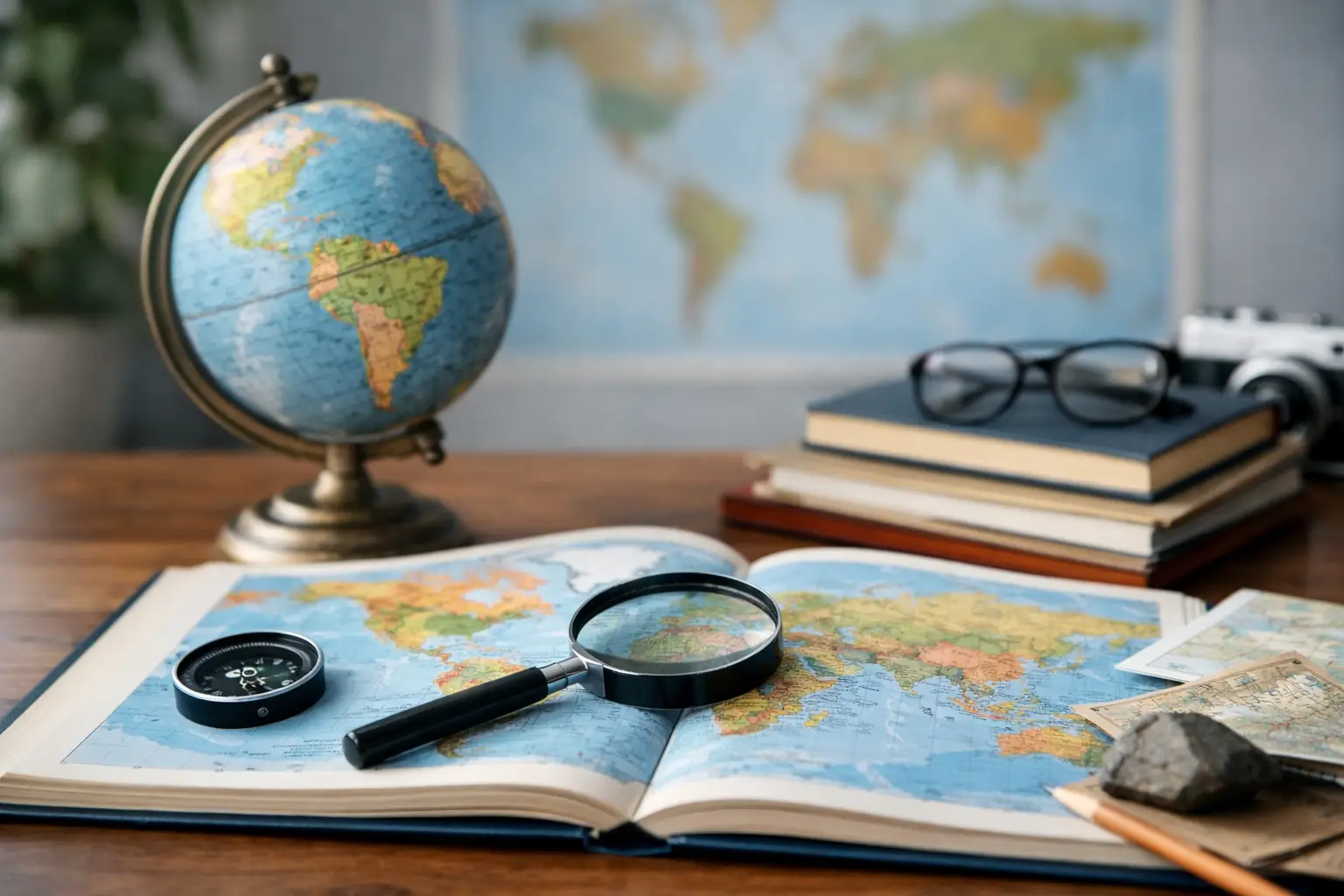
Ask someone to point to Kyrgyzstan on a blank map, explain why Egypt depends on the Nile, or name a country bordered by both India and China, and world geography stops feeling like a school subject and starts feeling like real knowledge. If you have ever wondered what do you learn in world geography, the short answer is this: you learn how the world fits together - physically, culturally, politically, and economically.
That sounds broad because it is. World geography is not just memorizing capitals or matching flags to countries. It teaches you where places are, why they matter, how people live there, and how land, climate, resources, borders, and movement shape daily life. The best part is that it turns random facts into patterns you can actually use.
What do you learn in world geography class?
Most world geography courses start with the basic skill that makes everything else possible: spatial thinking. That means learning to read maps, globes, coordinates, scales, and regions. You figure out how latitude affects climate, why mountains can isolate communities, and how coastlines often become centers of trade and population.
This part matters more than it gets credit for. Once you understand where things are, you can make sense of why certain countries have strong shipping economies, why some cities become global hubs, and why conflict often clusters around strategic territory. Geography gives context. Without it, world news can feel like disconnected headlines.
Students also learn the difference between physical geography and human geography. Physical geography covers natural systems like landforms, rivers, deserts, tectonic activity, climate zones, and ecosystems. Human geography focuses on people - population, migration, language, religion, urbanization, agriculture, politics, and culture. Put those together, and you get a clearer picture of why societies develop differently.
You learn how the land shapes life
One of the most useful things world geography teaches is that place is never neutral. Mountains, plains, rivers, islands, and climate all push human choices in certain directions.
A country with fertile plains and reliable rainfall may build a strong farming economy. A country with limited freshwater has a very different set of pressures. Nations with long coastlines often develop ports, fishing industries, and trade networks. Landlocked countries may depend more heavily on neighbors for access to global markets.
This is where geography gets interesting. It avoids simple answers. The environment influences people, but it does not fully determine what happens. Technology, government, infrastructure, and history matter too. A desert country with oil wealth may look very different from a desert country without it. Geography gives you the starting conditions, not the full script.
Climate is another major piece. In world geography, you usually learn how tropical, dry, temperate, continental, and polar climates affect settlement, agriculture, transportation, and risk. That helps explain why some regions deal with monsoons, drought, hurricanes, or permafrost, and how those conditions shape everyday life.
You learn how people organize space
World geography is also about how humans divide, use, and define the planet. That includes countries, borders, cities, regions, and trade routes, but also less visible patterns like language groups, migration corridors, and cultural zones.
Political geography shows how states are formed, how borders change, and why some boundaries are stable while others are disputed. A border on a map can look clean and simple. On the ground, it may cut through ethnic groups, water systems, or historic trade paths. That tension explains a lot about regional conflict and cooperation.
Urban geography looks at how cities grow and why. Why did Tokyo become massive? Why are some cities coastal and others inland? Why do megacities face pressure on housing, transit, and water? These are geography questions as much as economics or politics questions.
You also learn about population distribution. People do not spread evenly across the globe. They cluster where conditions support farming, trade, jobs, transportation, and infrastructure. That is why river valleys, coastal zones, and temperate regions often become population centers, while deserts, mountains, and extreme cold remain lightly settled.
You learn culture through location
A strong world geography course does not treat culture like a side topic. It shows how language, religion, food, architecture, and traditions develop in relation to place, movement, and contact with other groups.
For example, geography helps explain why island nations may develop distinct cultural identities, why port cities often become multilingual, and why migration changes neighborhoods, labor markets, and national politics. Cultural diffusion - the spread of ideas, foods, beliefs, and technologies - makes more sense when you understand trade routes, imperial history, and regional proximity.
This is one reason geography feels so practical. It helps you avoid seeing countries as trivia answers. Instead, you start seeing them as lived places with histories, constraints, and connections. Knowing that Brazil is large is one thing. Understanding how the Amazon, Atlantic coast, urban concentration, and colonial history shape Brazil is something else entirely.
You learn how the global economy moves
World geography also teaches the map behind the economy. You learn where resources are found, how goods move, and why certain regions specialize in certain industries.
Oil in the Persian Gulf, manufacturing networks in East Asia, wheat belts in North America, shipping chokepoints like the Suez Canal - none of these are random. Geography helps explain why supply chains take the routes they do and why disruptions in one place can ripple worldwide.
Trade is a big theme here. Countries exchange what they have, what they can produce efficiently, and what they need. But geography creates trade advantages and trade problems at the same time. Access to navigable rivers, deep-water ports, and neighboring markets can boost growth. Remoteness, rough terrain, or political instability can slow it down.
This is where world geography becomes unexpectedly current. If you want to understand energy prices, migration debates, food insecurity, or shipping delays, geography is often sitting in the background making the whole story make sense.
You learn regions, but not just by memorizing them
Most students do study world regions such as North America, Latin America, Europe, Sub-Saharan Africa, the Middle East, South Asia, East Asia, and Oceania. But the point is not just to memorize a regional map and move on.
The point is to notice patterns. Why does Southeast Asia have so many maritime trade connections? Why has Eastern Europe been shaped by shifting empires and borders? Why do many African borders ignore older ethnic and cultural landscapes? Regional geography gives you a framework for comparing places without flattening their differences.
There is a trade-off here. Regions are useful, but they can oversimplify. Not every country in a region shares the same language, religion, climate, or political system. Good geography teaching leaves room for those differences instead of pretending a whole region is one thing.
You build skills that go beyond geography
If you are still thinking, okay, but what do you learn in world geography that sticks, here is the real answer: you learn how to connect information.
You practice reading visual data, spotting patterns, interpreting maps, and asking better questions. Why are cities located there? Why does this country have this border? Why is this region vulnerable to famine, flooding, or conflict? Those habits carry over into history, economics, politics, and even everyday news literacy.
You also get better at mental mapping. That sounds small until you realize how often people talk about places they cannot locate. Geography gives you orientation. It makes the world less abstract.
And yes, there is still memorization. You will likely learn countries, capitals, major physical features, and important waterways. That foundation matters. But facts alone are not the finish line. They are the raw material for understanding relationships.
Why geography is easier to learn when it feels like a game
Geography sticks better when you use it often and in small doses. Trying to cram every country, capital, and border at once is a fast way to forget half of it. Daily play works better because repetition builds familiarity without turning learning into a chore.
That is why geography games are so effective. Guessing a flag, identifying a country from clues, or narrowing a location by distance and direction turns recall into action. You stop passively recognizing information and start actively using it. If you have ever played something like Flagdle, you know the loop - quick challenge, immediate feedback, and just enough pressure to make the fact stick.
There is also a confidence boost. The first time you confuse Chad and Romania, or mix up Slovenia and Slovakia, it is a miss. The fifth time, it becomes progress. Geography rewards repetition.
So what do you learn in world geography?
You learn where places are, why they developed the way they did, how people adapt to their environments, and how countries connect through culture, trade, migration, and politics. You learn that maps are not just labels. They are evidence.
More than that, you learn to notice the world with sharper eyes. A mountain range becomes a barrier and a border. A river becomes transport, agriculture, and conflict risk. A city becomes a clue about history, resources, and movement. Once geography clicks, the world stops looking flat.
Keep learning it the fun way, and those names on the map start turning into places you actually understand.