What Is World Geography, Really?
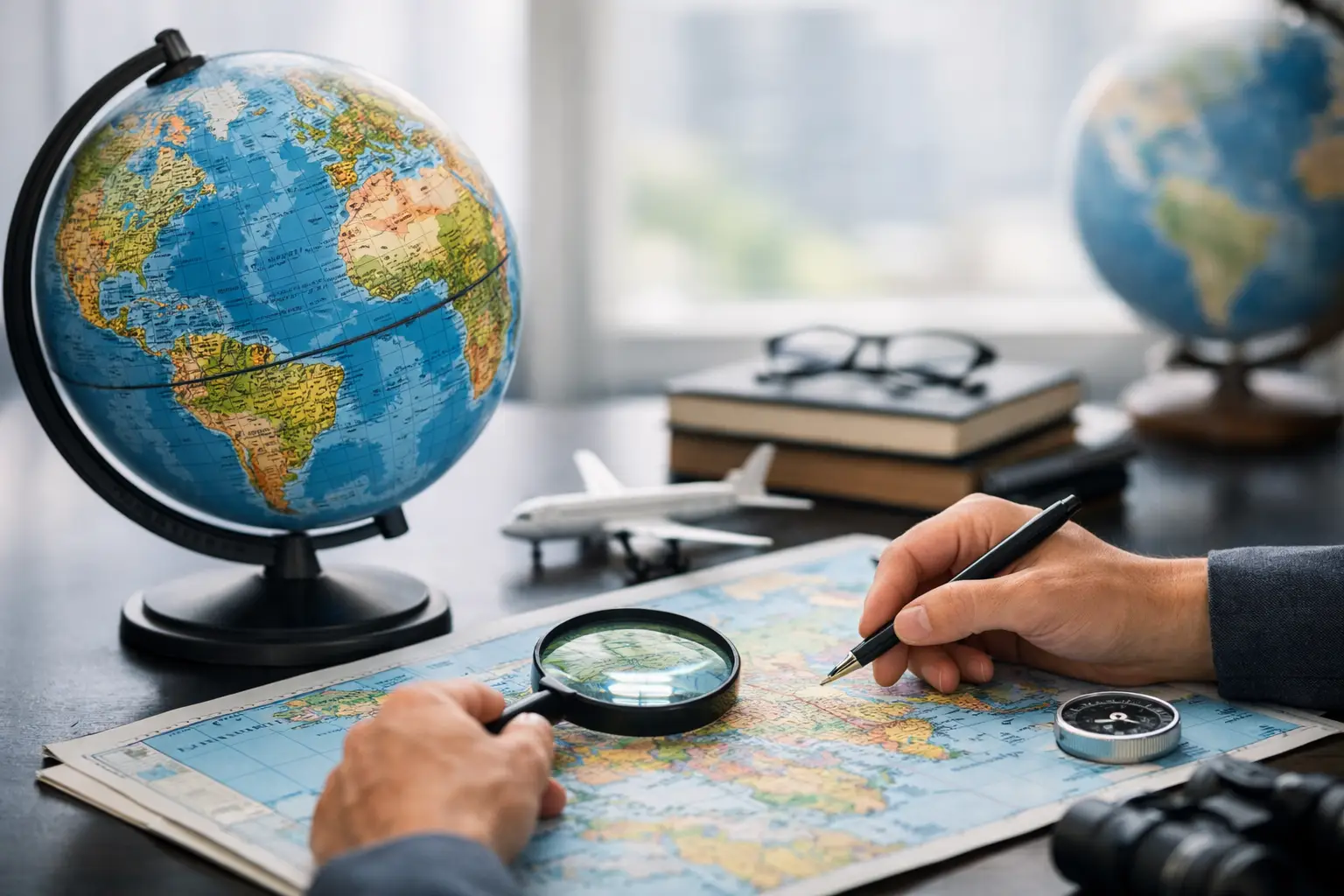
You probably already use world geography more than you think. When you guess where a flag belongs, follow a hurricane on the news, track a flight across the Atlantic, or wonder why two neighboring countries feel so different, you are asking the same basic question: what is world geography?
The short answer is simple. World geography is the study of places across the planet and the relationships between people, land, climate, resources, borders, and movement. But the useful answer is bigger than memorizing maps. Geography explains why cities grow where they do, why trade routes matter, why deserts limit farming, and why culture shifts from one region to the next.
That is why geography sticks. It is not just a school subject. It is a way to make sense of the world.
What is world geography?
World geography is the study of Earth at the global scale. It looks at continents, countries, oceans, regions, and major physical features, but it also looks at how humans live within those spaces. That includes population patterns, language, migration, political borders, economies, and environmental change.
If that sounds broad, it is. Geography sits in an interesting middle ground between natural science and social science. It cares about mountains, rivers, and climate, but it also cares about people, conflict, transportation, agriculture, and urban life.
A lot of people reduce geography to capital cities and country names. Those facts matter, but they are only the surface. Knowing that Brazil is in South America is useful. Understanding how the Amazon affects climate, biodiversity, settlement, and the economy is geography in action.
The two big sides of world geography
To understand what world geography means in practice, it helps to split it into two main areas: physical geography and human geography. They overlap constantly, which is part of the point.
Physical geography
Physical geography focuses on the natural world. It studies landforms, weather, climate zones, ecosystems, rivers, oceans, and natural hazards. It asks questions like why monsoons form, how mountain ranges shape rainfall, or why some regions face earthquakes more often than others.
This side of geography helps explain the stage on which human life happens. A country with fertile plains will often develop differently from one covered by rugged mountains. Coastal access can support trade and fishing. Harsh climates can limit settlement or push innovation.
Human geography
Human geography focuses on people and how they organize life across space. It covers population density, cities, religion, language, culture, migration, political boundaries, and economic activity.
This is where geography starts to feel very close to history, politics, and current events. Why do some borders follow rivers while others cut straight across deserts? Why do some cities become global hubs? Why do people move from rural areas to urban ones? These are geographic questions because they are all about place and spatial patterns.
Why world geography matters outside the classroom
World geography matters because location changes everything. The same decision can play out very differently depending on climate, access to water, distance from markets, or exposure to risk.
Take food, for example. What grows easily in one region may be impossible in another. Rice thrives in conditions that are very different from those needed for wheat. That affects local diets, trade, labor, and even cultural identity.
Or look at news headlines. A conflict near a shipping route can affect prices far from the conflict itself. A drought can reshape migration. A mountain border can slow invasion but also isolate communities. Geography does not explain every outcome, but it often explains the constraints and pressures behind them.
Even day to day, geography shows up in travel, sports, weather apps, supply chains, and internet conversations. If you have ever checked where a country is after seeing it trend online, you were using geography to add meaning.
What world geography includes
A good world geography view usually brings together several layers at once.
One layer is physical space: continents, oceans, rivers, deserts, mountains, forests, and climate zones. Another is political space: countries, states, borders, capitals, and international regions. A third is cultural and economic space: languages, religions, trade networks, migration paths, and urban centers.
The interesting part is how those layers interact. Political borders rarely match cultural boundaries perfectly. Climate zones do not care about country lines. Trade often follows coastlines, rivers, and chokepoints more than neat shapes on a map.
That is why geography is not just about where things are. It is about why they are there, how they connect, and what changes when conditions shift.
World geography is about patterns
The fastest way to get better at geography is to stop treating every country as an isolated fact. Geography becomes much easier when you look for patterns.
For example, many of the world’s largest cities sit near coasts or major rivers. That is not random. Water supports transport, trade, food supply, and population growth. Many deserts cluster around certain latitudes because global wind patterns affect rainfall. Languages often spread through migration, conquest, and trade. Mountain ranges can create natural barriers that shape politics for centuries.
Once you start seeing patterns, maps become less like trivia sheets and more like evidence.
What is world geography in everyday learning?
For most people, world geography is not about becoming a specialist. It is about building a mental map that makes other knowledge easier to place.
When you know roughly where countries are, you can understand headlines faster. When you recognize regional patterns, travel becomes more meaningful. When you connect climate, terrain, and culture, facts stop feeling random.
This is also why geography works so well in game form. A quick challenge around flags, capitals, borders, or distance gives you just enough friction to make the lesson stick. You are not reading a textbook page and hoping it stays in memory. You are testing recall, noticing gaps, and improving over time.
That kind of repetition matters. Geography is a huge subject, so small daily reps usually beat one long cram session.
Common misunderstandings about world geography
One common mistake is thinking geography is just memorization. Memorization helps, especially at the start, but geography without context is fragile. You might remember a capital for a week and forget it soon after. Tie it to region, language, neighboring countries, or a physical landmark, and it becomes easier to keep.
Another mistake is assuming geography is static. It is not. Borders change. Cities grow. Rivers shift course. Climate patterns move. Populations migrate. Even place names can change depending on politics, language, or history.
There is also a tendency to think geography gives clean answers. Sometimes it does, but often it gives better questions instead. Why is one country densely populated while a nearby one is not? Why does one port matter more than another? Usually the answer is a mix of physical setting, historical timing, politics, and economics.
How to get better at world geography
The best approach is simple: mix map awareness with repetition and curiosity. Learn countries by region instead of trying to tackle the whole planet at once. Pair flags with location. Pair capitals with nearby countries. When you miss one, look at what borders it, what sea it touches, or what language family is common there.
It also helps to study by comparison. Norway and Sweden are easier to remember together than alone. So are Laos and Cambodia, or Uruguay and Paraguay. Geography is relational. Places make more sense next to other places.
Current events can help too, as long as you use them carefully. News stories create memory hooks, but they can skew your sense of what matters if you only learn places tied to crisis. Balance that with maps, quizzes, travel content, and low-pressure games that keep the subject broad and repeatable.
If you like daily challenges, this is where a platform like Flagdle fits naturally. A short geography puzzle does not teach everything at once, but it builds the habit that makes deeper knowledge possible.
The real value of world geography
At its best, world geography makes the planet feel less random. It turns names on a map into places with shape, context, and connection. It helps you understand why people live as they do, why countries interact as they do, and why distance, terrain, and climate still matter in a very connected world.
You do not need to memorize every border on Earth to benefit from that. You just need to start noticing how place influences everything else. Once that clicks, geography stops being a list of answers and starts becoming a much better way to ask questions.