Capital Hint Systems for Smarter Geography Play
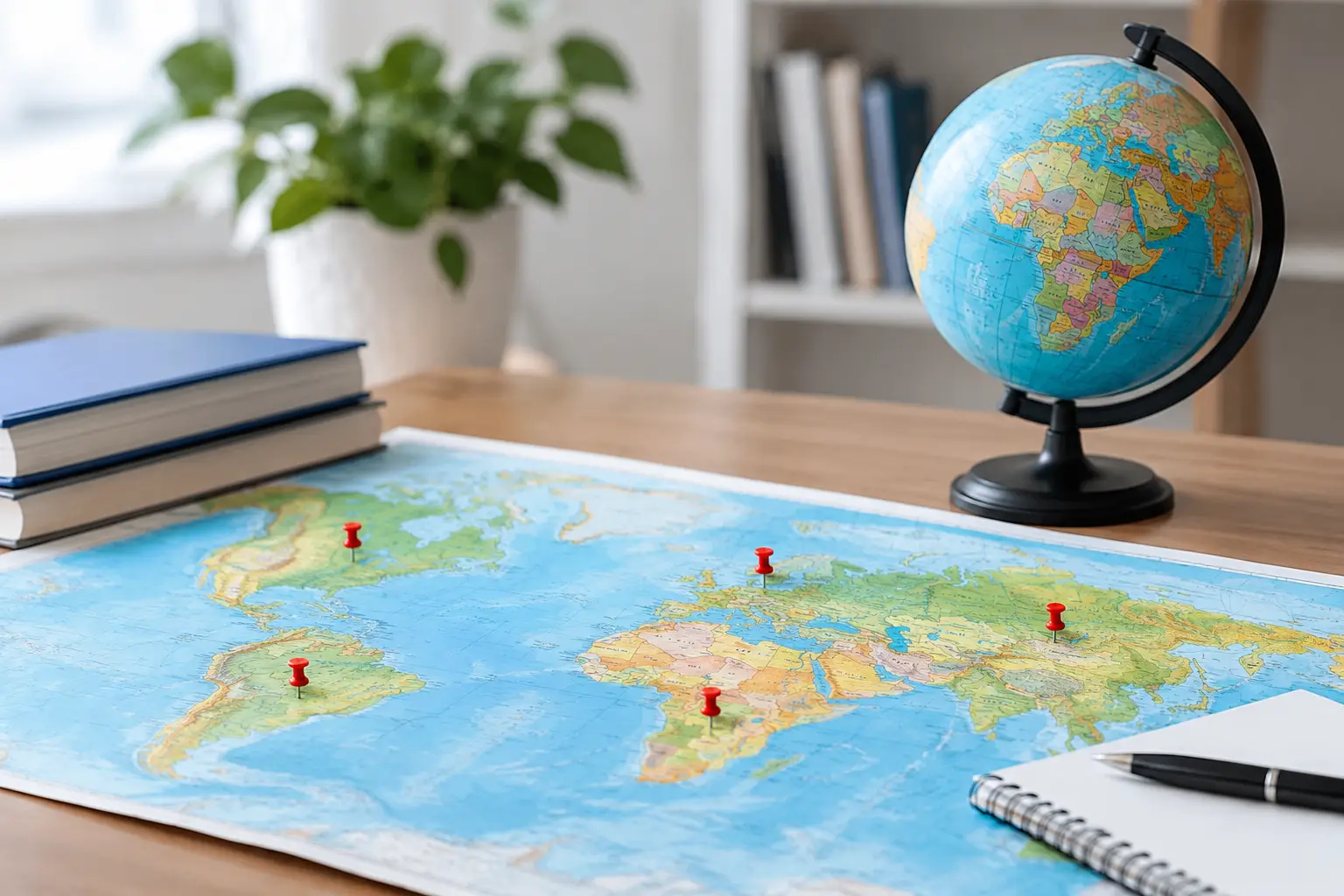
A capital clue can make a geography game feel brilliant or wildly unfair. “Coastal city” is too broad. “Home to a famous clock tower” may give the answer away before the player has a chance to think. The best capital hint systems sit in the middle: they offer enough information to create a path forward while leaving room for a real guess.
That balance matters because capital games are not only about getting today’s answer. They are about building a mental map of the world, one clue at a time. A good hint should help you notice patterns, connect countries to regions, and remember more than a single capital after the round ends.
What Are Capital Hint Systems?
Capital hint systems are the rules and clue types used to guide players toward a country or capital city. Rather than asking players to pull an answer from memory with no support, the system reveals useful details in stages.
Those details can point to geography, language, nearby countries, population, climate, history, landmarks, currency, or direction. The goal is not to pile on random facts. It is to offer clues that narrow the field fairly.
For example, imagine the answer is Brasília. An early clue might say the capital is in South America. A later clue could mention that it was planned and built to become the national capital. A final clue might identify Portuguese as the official language. Each step makes the puzzle easier, but each step also teaches something worth keeping.
The order is the system. A great fact revealed too early can end a round instantly. A vague fact revealed too late can leave players stuck. Good design turns difficulty into a clear progression.
Why Hint Order Changes the Whole Game
The first clue should create possibility, not certainty. It gives players a starting point: a continent, a broad region, or a physical feature. If you know the answer is in Central Asia, you may not know the capital yet, but you have already started sorting countries in your head.
The next clue should narrow that group. It may point to a language family, a border, a river, or an unusual feature of the city. This is where educated guesses become rewarding. Players who remember that Astana is in Kazakhstan, for instance, can combine regional knowledge with a clue about a large, sparsely populated country.
The final clue can be more direct. It might mention an iconic landmark, a former city name, or a national association that strongly points to one place. At this point, the game should be helping a player finish, not protecting the answer for its own sake.
This structure is also better for different skill levels. Newer players get a way into the puzzle. Geography regulars can solve earlier and feel the payoff of what they know. Everyone sees the same challenge, but not everyone needs the same number of hints.
The Best Clues Build Geography Skills
Not all clues teach equally. A clue such as “this capital starts with B” may be useful in a pinch, but it does little for long-term recall. Geographic clues give players handles they can use again.
Regional clues are a strong place to start. Knowing that a capital is in the Baltics, the Horn of Africa, or the Caribbean gives the player a map-based framework. Directional clues can be equally useful when they are precise enough to matter, such as identifying a country east of a major neighbor or a capital near a national border.
Language and history clues add another layer. Spanish does not identify one capital, but it can remove many possibilities when paired with a continent. A clue about a former colonial power may help too, although it needs care. History is complicated, and a good game should avoid turning countries into a single historical label.
City-specific facts work best later in the round. A clue about elevation could help identify La Paz. A clue about a capital’s position on the Danube could guide players toward Budapest, Bratislava, Belgrade, or Vienna before another detail separates them. That is productive uncertainty: the clue sparks thought instead of ending it.
Fair Hints Are Specific Without Being Sneaky
A hint system needs consistency. If one puzzle uses population and another uses a landmark, players should still understand what kind of information they are receiving and how much weight to give it. Surprise is fun. Confusion is not.
Specificity matters too. “Located near water” is technically true for many capitals and rarely helpful. “Located on an island” is far more useful, though still not always enough to identify the answer. The strongest clues remove some options while preserving several plausible ones.
Watch for accidental giveaways. A clue can be factually correct and still be too revealing because it uses the country name, a close variation of it, a famous national symbol, or an unmistakable local phrase. Even a flag color clue may make certain answers obvious. A fair system checks every clue for what it reveals on its own and what it reveals in combination with earlier hints.
There is a trade-off here. Very difficult puzzles can feel satisfying to experienced players, but they can also turn a daily game into a lookup contest. Very easy puzzles create quick wins, yet may not leave players with much to remember. The sweet spot depends on the audience, but staged clues let one puzzle serve both groups better than a single all-or-nothing question.
How to Use Capital Hints More Effectively
When you play, pause before asking for another clue. Try to name the region first, then list two or three possible countries. This small habit changes a passive hint into active recall.
If a clue says the country is landlocked, do not jump straight to a capital. Think about which countries in the region fit that condition. If another hint mentions French, English, Arabic, or Portuguese, use it to cross off options. The best guesses come from combining clues, not waiting for the one fact that makes the answer obvious.
It also helps to separate country knowledge from capital knowledge. You may recognize the country quickly but blank on its capital. That is still useful progress. Make a guess, see the result, and say the correct pairing to yourself once: “Mongolia, Ulaanbaatar” or “Slovenia, Ljubljana.” Short repetition after a reveal is often what makes the answer stick.
For teachers, families, or friendly competitors, use a simple rule: explain why you guessed before revealing the next hint. One player may remember a border, another may recognize a language clue, and someone else may know a city fact. The conversation becomes part of the learning, without making the game feel like homework.
Designing a Daily Challenge People Want to Return To
A daily capital game needs more than accurate facts. It needs a rhythm. Players should understand the rules in seconds, take a few minutes to play, and leave with one clear piece of knowledge.
That is why three well-chosen hints can be better than a long trivia paragraph. The first creates the challenge. The second rewards reasoning. The third gives most players a fair shot at finishing. A shared daily answer also makes score comparisons meaningful because everyone faced the same information.
Variety keeps the format fresh. One day might lean on physical geography, another on language, and another on urban history. Still, the underlying difficulty should stay steady. If every hard answer is saved for Friday or every clue relies on obscure monuments, players will notice. Fairness is what turns a one-time puzzle into a habit.
Flagdle-style geography play works best when the clue feels like an invitation: take a guess, use what you know, and learn the rest in the reveal. No account, no long setup, just a small challenge with a useful payoff.
The next time a capital clue appears, do not treat it as a shortcut to the answer. Treat it as a coordinate. Follow it, test a few possibilities, and let the wrong guesses teach you where the right one belongs.