Flags Versus Flashcards: Which Builds Memory?
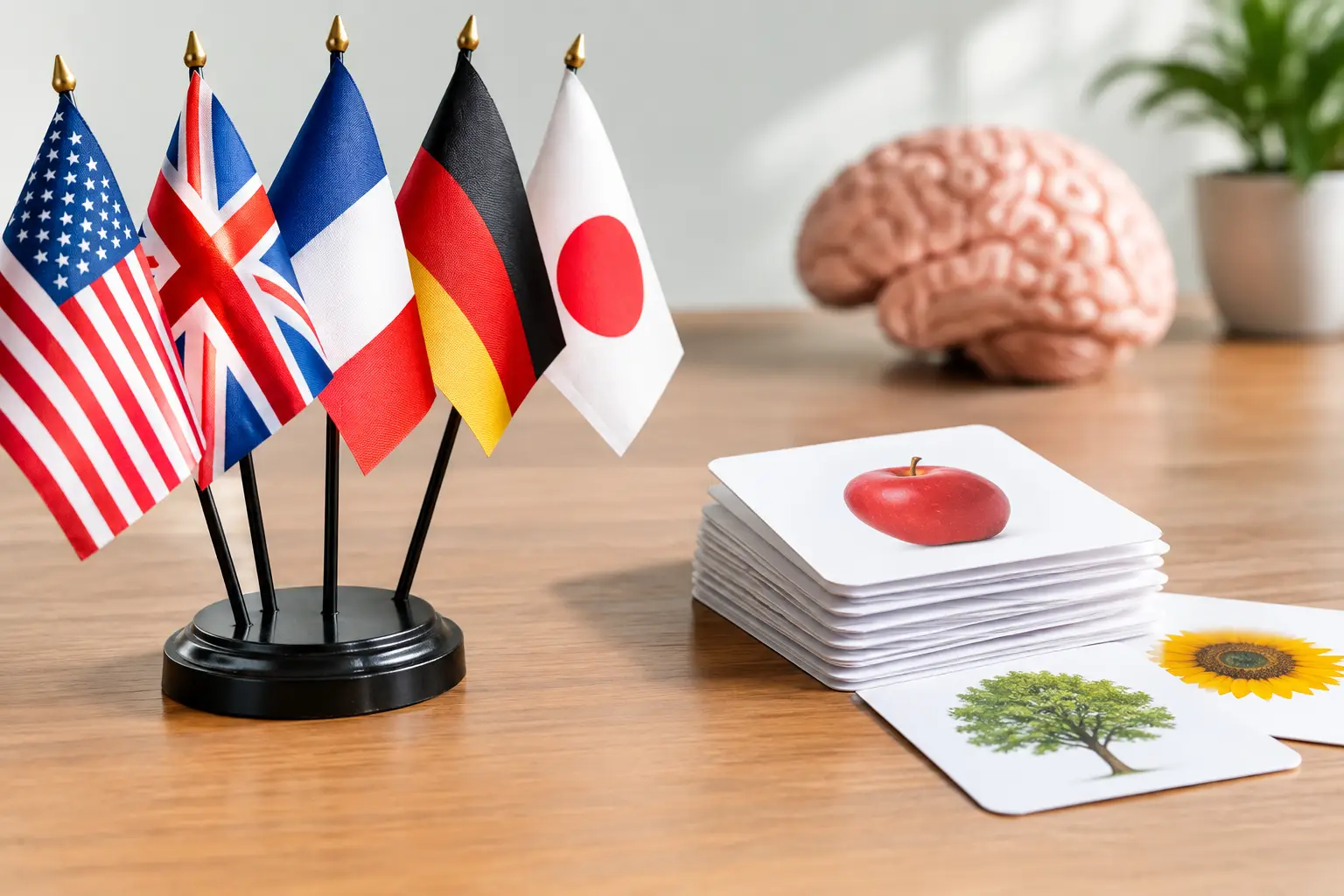
A green, yellow, and red flag appears on screen. You know you have seen it before, but the country name will not arrive. That small moment of effort is why flags versus flashcards is a more interesting question than it first appears. Both can teach geography. They simply ask your brain to work in different ways.
Flags Versus Flashcards Is Not a Fair Fight
Flashcards are built for direct recall. One side gives you a prompt, the other gives you the answer. A card might show the flag of Ghana and ask for the country, or show “Ghana” and ask you to picture the flag. The task is focused, repeatable, and easy to organize.
Flag games add uncertainty. You may see only part of a design, get a limited number of guesses, or need to rule out similar flags before choosing an answer. Instead of following a study deck in order, you are solving a tiny visual puzzle.
That difference matters because geography is not just a list of facts. It is a web of visual patterns, regional clues, names, capitals, borders, languages, and history. Flashcards can build the individual facts. Flags can make those facts feel recognizable when they show up outside a study session.
Neither method wins every time. If you need to learn 80 countries before a quiz on Friday, flashcards offer speed and coverage. If you want to remember a flag months from now, a well-designed guessing challenge may create the stronger memory moment.
What Flag Challenges Ask Your Brain to Do
A flag is not a simple picture once you start looking closely. Its colors, shapes, symbols, stars, stripes, proportions, and even its resemblance to another country’s flag become clues. A daily flag challenge turns those details into a decision: What do I notice, what can I eliminate, and what is my best guess?
That process uses active recall. You are not being told the answer and asked to recognize it. You are reaching for an answer before you see it. The effort can feel slightly frustrating, especially when you miss, but that is often the useful part. A correct answer after a real attempt tends to stick better than an answer you only glanced at.
Recognition becomes comparison
Many flags are memorable because they are unusual. Nepal’s shape, Jamaica’s diagonal cross, Brazil’s globe, and Japan’s red circle give the brain a strong visual hook. The harder cases are often more educational. Romania and Chad, Indonesia and Monaco, or Ireland and Côte d’Ivoire force you to notice order, shade, ratio, and context.
Comparison is a major advantage of flag-based play. You stop memorizing isolated images and start building categories: Nordic crosses, Pan-African colors, tricolors, crescents, stars, coats of arms, and regional design traditions. These are not shortcuts that replace learning. They are handles your memory can use.
A guess creates a memorable gap
When you guess Belize and the answer is Guatemala, you have created a gap between what you thought and what is true. That gap gives the correction a job to do. Next time, you may remember the bird, the wreath, or the denser central emblem because you once confused the two.
A game should not make wrong answers feel like failure. In geography, a near miss is often evidence that your mental map is getting more detailed. You recognized the region. You spotted the color family. You narrowed the field. Now you have one more distinction to keep.
Where Flashcards Still Shine
Flashcards remain one of the best tools for deliberate study. They are especially useful when you need control. You can repeat difficult cards, separate countries by continent, reverse the prompt, or mix flags with capitals and maps.
They also make progress visible. A deck can tell you which countries you know, which ones you confuse, and which answers need another round. For students preparing for a test, that structure is hard to beat.
The catch is that flashcards can become too familiar. If you always study the same card in the same order, you may remember the sequence instead of the fact. You might recognize a flag instantly when it appears in your deck but freeze when it is cropped, rotated in your mind, or placed next to a similar design.
Flashcards work best when they require a real answer. Look at the flag, say or type the country before flipping the card, then add one detail that separates it from a close match. “Blue over yellow: Ukraine.” “Blue, yellow, red vertical stripes: Romania.” The extra detail makes the card less passive.
Where Flag Games Can Fall Short
Games are great at creating motivation, but motivation is not the same as coverage. A player can return every day and still see only one flag at a time. That builds a habit, not a complete curriculum.
A guessing game can also reward lucky pattern matching. If a clue is obvious, you may get the answer without learning much beyond that single round. And if the challenge is too hard too often, players may start throwing out guesses instead of paying attention.
The answer is not to make every game more complicated. It is to add a quick learning beat after each result. See the full flag. Read the country name. Notice one identifying feature. If you missed it, name the country you guessed and the detail that distinguishes the correct answer. That takes seconds, but it turns a round into feedback.
A daily game like Flagdle works well in this role because the limited format keeps the challenge light. One shared puzzle is easy to start, easy to discuss, and easy to revisit tomorrow. It is not meant to replace every study tool. It gives knowledge a reason to come back.
Build a Better Geography Loop
The strongest approach combines the pressure of a guess with the repetition of review. Start by looking at a flag without hints. Make your best answer before checking. Then confirm the country and attach one useful detail: its capital, continent, neighboring country, or a feature of the flag itself.
Later, return to that fact in another format. If you learned the flag of Kazakhstan, try identifying Kazakhstan on a map, recalling its capital, or recognizing it from a clue about Central Asia. Each change of prompt makes the knowledge more flexible.
Keep sessions short enough to repeat
A 10-minute daily routine beats a long geography sprint that you never repeat. Try one flag puzzle, then review a handful of flashcards from previous misses. The goal is not to collect a perfect score every day. The goal is to meet countries often enough that their names and symbols stop feeling distant.
Spacing matters too. Review confusing flags tomorrow, then a few days later, then the following week. If you only revisit a country immediately after seeing it, the answer may be sitting in short-term memory. A little time between attempts gives your brain a chance to prove what it retained.
For Students, Teachers, and Trivia Players
Students can use flag games as a warm-up before studying a region. The game reveals what already feels familiar and what needs attention. Afterward, flashcards can target the countries that were missed rather than treating every card as equally urgent.
Teachers can use a single flag prompt as a fast opener. Ask students what they notice before asking for the country. A star count, a color choice, or a symbol can lead naturally into a short conversation about geography and history. The point is not to turn every flag into a lecture. It is to make observation part of the learning.
Trivia players benefit from the same habit. Most quiz questions are not presented exactly like a study guide. They arrive with partial information, time pressure, and distracting alternatives. Practicing a thoughtful guess helps build the calm, quick recall that trivia rewards.
The next time a flag makes you pause, do not rush past that pause. Take a guess, check the answer, and notice one thing you will look for next time. That is how a small daily puzzle becomes a bigger map in your head.