Map Trivia Challenge for Better Geography Skills
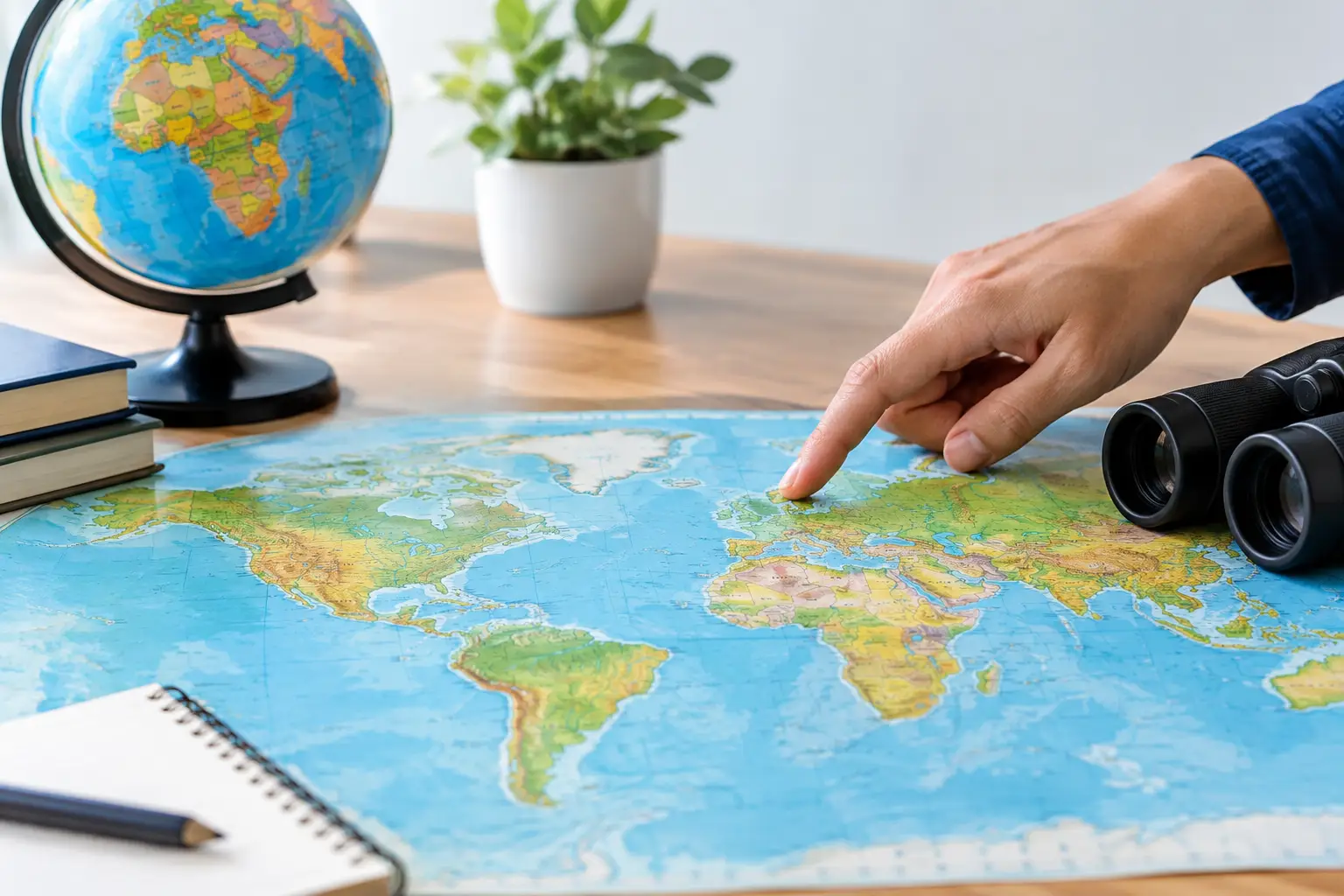
A blank map can make even confident trivia players hesitate. You may recognize a country’s flag, capital, or shape, then suddenly forget what sits beside it. That is exactly what makes a map trivia challenge so useful: it turns vague recognition into real geographic recall, one quick question at a time.
Map games are not about memorizing every border on Earth in a single sitting. The best ones ask you to notice patterns, make smart guesses, and learn from the answer without turning geography into homework. Give yourself a few minutes a day, and the map starts to feel less like a test and more like a familiar place.
What Makes a Map Trivia Challenge Worth Playing?
A strong map trivia challenge gives you one clear task. Identify a country from its position. Name a capital. Follow a direction clue. Estimate how far one place is from another. The rules should be simple enough to understand immediately, but the questions should leave room for thinking.
That balance matters. If every question is too easy, you are only confirming what you already know. If every question feels impossible, you stop playing. Good geography trivia sits in the middle. It gives you enough information to make an informed guess, then helps the correct answer stick.
Maps also make trivia more connected. Knowing that Peru is in South America is helpful. Knowing it borders Ecuador, Colombia, Brazil, Bolivia, and Chile gives that fact a framework. The next time you see a clue about the Andes, the Pacific coast, or a neighboring country, you have more to work with.
Start With Regions, Not Random Facts
When a map question catches you off guard, do not treat it as a failure. Treat it as a location waiting for anchors. The fastest way to build map knowledge is by learning regions as groups rather than collecting isolated country names.
Start with a continent or subregion you see often. Central America is a great example because its narrow shape provides a natural order. The Baltic states work well for the same reason. So do the countries of southern Africa, the Balkans, and the Gulf.
Ask simple placement questions as you play: What is north of this country? Does it touch an ocean? Is it on a peninsula, island, or inland? Which larger country is nearby? These details create a mental map that is more durable than a flashcard answer.
You do not need to learn an entire region before moving on. In fact, mixing familiar and unfamiliar areas keeps the challenge fun. One day you might identify countries around the Mediterranean. The next, you might test island nations in the Caribbean or Pacific. Variety helps you avoid memorizing a fixed sequence without understanding the map.
Use Neighbor Clues Carefully
Borders are powerful clues, but they can also be misleading. A country with many neighbors, such as Germany or the Democratic Republic of the Congo, can be harder to place than an island nation. For those questions, combine border knowledge with shape, coastlines, and regional position.
A useful habit is to name one neighbor before making your final guess. If you think the answer is Slovakia, ask yourself what should be nearby. Poland to the north? Hungary to the south? A quick check in your head can turn a hunch into a better answer.
Make Your Guesses Do Some Work
The point of a daily game is not a perfect streak at any cost. It is building better instincts. When you guess, pause for a second and decide why that answer seems right. Maybe the country is landlocked. Maybe the clue puts it east of a familiar capital. Maybe its outline looks like a shape you have seen before.
That small moment of reasoning makes a difference. A lucky answer feels good, but a reasoned answer teaches you something you can use again.
When you miss a question, look for the closest useful connection. If you guessed Laos instead of Cambodia, remember that both are in mainland Southeast Asia, but Cambodia reaches the Gulf of Thailand and has a different position around the Mekong region. If you mixed up Uruguay and Paraguay, use the coast as your reset: Uruguay has Atlantic shoreline; Paraguay does not.
The correction does not need to be long. One clear contrast is often enough.
Mix Map Questions With Other Geography Modes
Map placement is a core skill, but it becomes more useful when you connect it with flags, capitals, and country clues. Each mode gives your brain a different route back to the same answer.
A flag can trigger a memory of a region. A capital can help you locate a country. A distance-and-direction clue can reveal whether your first instinct makes sense. Together, these formats turn geography into a network rather than a list.
For example, if you know that Lisbon is Portugal’s capital, you can place Portugal on Europe’s western edge. If a map question asks about a country directly east of Portugal, Spain becomes much easier to identify. The knowledge compounds.
This is why a mixed daily routine works better than drilling one kind of question forever. Try a map round, then a flag or capital question. Keep it short. The goal is a repeatable habit, not a marathon session you never want to repeat.
A Simple Daily Routine That Sticks
The best geography routine is the one you will actually do tomorrow. Five minutes is enough to make progress if you stay consistent.
Begin with one daily map question and make your best guess before looking for help. Then spend a minute reviewing the answer and its surrounding countries. Follow with a second geography mode, such as a flag guess or capital prompt. Finish by recalling one fact you learned without checking the screen.
That last step is small but valuable. Say it out loud or write it down: “Suriname is on the northeast coast of South America,” or “Kyrgyzstan borders China.” Retrieval is what turns a fact you just saw into something you can use later.
If you play with friends, share more than your score. Share the question that fooled you or the clue that made the answer click. Friendly competition can make a daily challenge more motivating, but comparing your reasoning is where the learning happens.
Avoid the Most Common Map Trivia Traps
Some mistakes appear again and again. The first is overrelying on size. Large countries are easier to spot, but small nations often carry the most useful lessons because they force you to notice context. Luxembourg, Lesotho, Eswatini, Brunei, and Moldova all become easier once you know what surrounds them.
Another trap is treating continents as if they are evenly familiar. Many US players can quickly place countries in North America and western Europe, then lose confidence in Africa, Central Asia, or Oceania. That is normal. Rather than avoiding those regions, give them extra turns. Repetition works best when it is targeted.
Finally, do not confuse speed with skill. Quick answers are satisfying, especially in a shared daily game, but slowing down on difficult questions is not cheating yourself out of the challenge. It is how you build the pattern recognition that later makes speed possible.
Turn a Miss Into a Memory
Every wrong answer gives you a choice. You can move on and forget it, or attach it to something memorable. If you miss Botswana, remember that it sits above South Africa and beside Namibia. If you miss Ecuador, picture it straddling the equator on South America’s Pacific side. If you miss the Philippines, remember that it is an archipelago east of Vietnam.
The best memory hooks are simple, accurate, and tied to the map itself. Avoid complicated stories you will not remember next week. A coastline, a border, a directional clue, or a nearby country is usually enough.
Flagdle-style daily geography games make that practice easy because the challenge is short, fresh, and shared. You can play, learn one useful connection, and come back tomorrow without an account or a long setup.
The map will not become familiar all at once. It becomes familiar when Argentina stops being a name and starts being the long country along South America’s southeast coast, when Nepal becomes the country between India and China, and when a difficult guess gives you one more reason to remember where the world fits together.